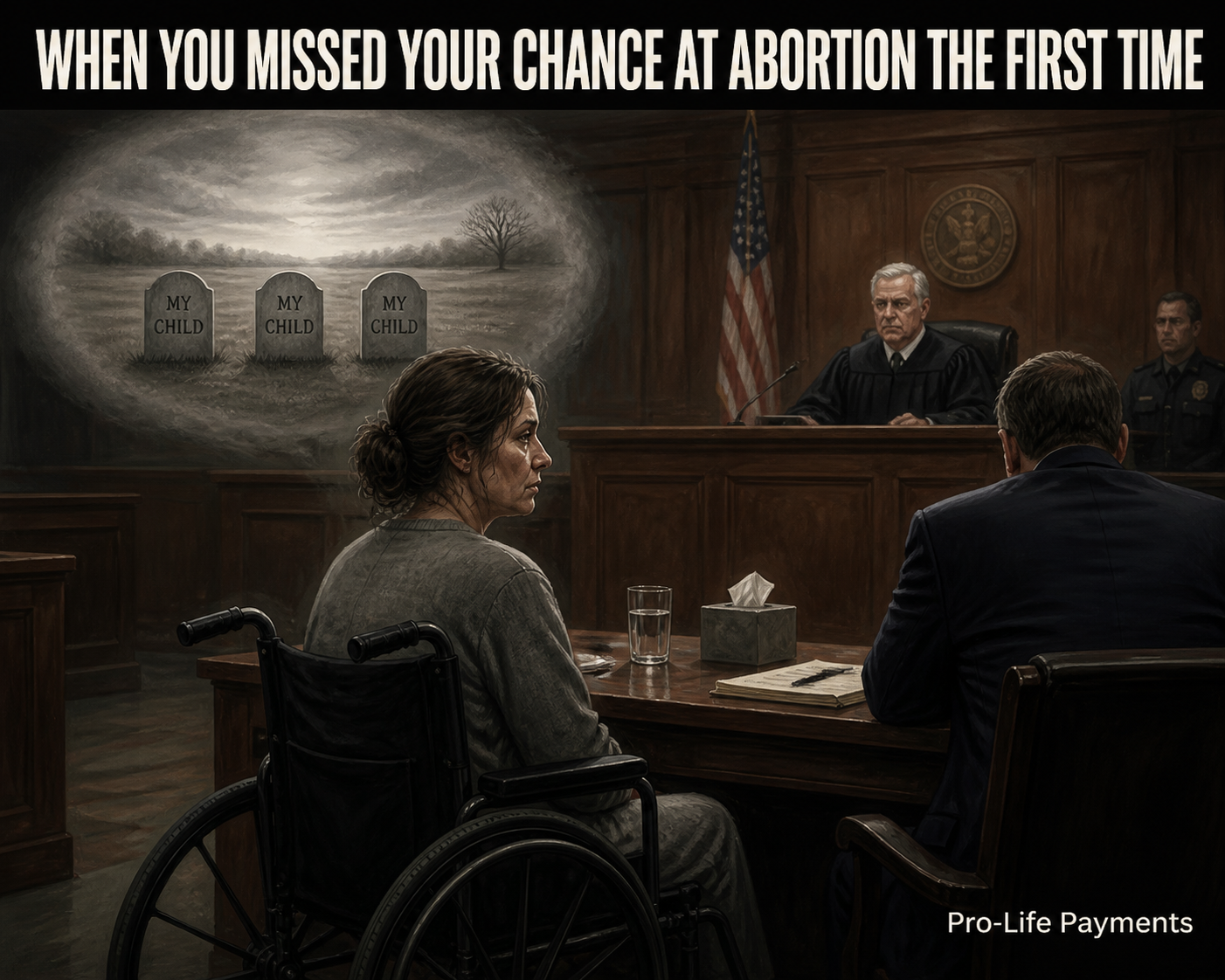
What happens when a culture spends decades insisting that a child can be legally ended before birth, then confronts a case involving children who were already born? The question is not whether the deaths of Cora, Dawson, and Callan Clancy are the same event as an abortion. They are not. The question is whether a society that separates human worth from the child’s humanity has made it harder to speak clearly when a dependent child is harmed.
The Clancy case has been discussed through the lenses of postpartum mental illness, criminal responsibility, medical treatment, and maternal suffering. Those subjects deserve serious attention. Mothers in psychiatric crisis need urgent care, and children in danger need protection. But compassion for a suffering adult cannot require moral disappearance of the children. The children remain children, regardless of the explanation offered for the violence.
Roe v. Wade Changed the Legal Vocabulary
In Roe v. Wade, the Supreme Court held that the Constitution protected a right to abortion under a constitutional privacy framework. The decision treated the unborn child’s legal status as a question the Court did not need to resolve. That move had a lasting cultural consequence: it allowed public language to describe the same developing human being through different moral categories depending on location, age, and wantedness.
In Dobbs v. Jackson Women’s Health Organization, the Court overruled Roe and returned abortion regulation to elected representatives. Dobbs changed constitutional doctrine, but a judicial reversal does not instantly undo decades of habits. Many people still speak as though dependence makes a child less valuable, or as though a difficult pregnancy turns the child into a problem rather than a person.
The pro-life argument is not that pregnancy is easy, that mothers never face frightening circumstances, or that mental illness is imaginary. It is that hardship does not change the identity of the human being who needs protection. A child’s worth cannot depend on whether an adult has the resources, health, or desire to welcome that child.
When Location Becomes the Measure of Worth
Abortion law has often drawn a legal line at birth. Before birth, the child may be described as a pregnancy or a medical condition. After birth, the same child is recognized as a person under ordinary criminal law. Birth is important, but it does not create humanity. It changes the child’s location and the obligations of the surrounding adults.
That distinction matters when people respond to the Clancy case by centering only the accused adult’s suffering. Postpartum psychosis is a serious psychiatric emergency that can involve a break with reality and requires immediate medical intervention. A humane response should improve screening, treatment, family support, and emergency protection. It should also say plainly that children are not expendable because they are dependent, vulnerable, or difficult to protect.
Legal responsibility and moral truth are related but not identical. A jury may have to determine what a defendant intended, understood, or was capable of doing. The public still has a duty to remember the victims. Explaining a crisis is not the same as declaring the child’s death acceptable.
From “Choice” to the Logic of Disposable Dependents
The historical concern is not that every abortion advocate supports violence against born children. That would be an unfair and unsupported claim. The concern is about moral logic. When a culture repeatedly teaches that the stronger person may decide whether a dependent human being will live, it trains people to view dependence as a reason for elimination rather than a reason for protection.
That logic can appear in different settings: an unborn child may be rejected because the pregnancy is unwanted; a newborn may be neglected because the child is burdensome; a disabled person may be treated as a problem because care is costly. These situations are not identical, and they should not be collapsed into one another. But each tests whether human rights belong to every human being or only to those whom others choose to defend.
The Clancy case should therefore lead to a child-centered moral clarity. Cora, Dawson, and Callan were not symbols in an argument. They were individual children. Their mother’s alleged illness may be relevant to treatment and legal responsibility, but it does not make their lives less real or their deaths less tragic.
Protect Mothers and Children Together
A serious pro-life response rejects the false choice between caring about mothers and caring about children. Families need practical support before and after birth. Clinicians need training to recognize severe postpartum symptoms. Relatives and friends need to know that suicidal thoughts, profound insomnia, hallucinations, paranoia, or frightening thoughts about a child can require immediate emergency help. Children need a safety plan when an adult is in crisis.
Communities should also reject the idea that asking for help is shameful. A mother who is mentally ill needs treatment, not mockery. A child who depends on her needs protection, not philosophical ambiguity. Both truths can be held at once.
That is the lesson abortion’s legacy makes harder to face. If the child’s humanity is treated as negotiable before birth, people may become less practiced at defending the child’s humanity when the child is born, dependent, and inconvenient. The answer is not to minimize mental illness or prejudge a jury. The answer is to recover a consistent principle: every child deserves protection because every child is human.
The Chance We Still Have
The title of this article is intentionally provocative. “When you missed your chance at abortion the first time” describes a horrifying idea: that birth could be viewed as a missed deadline rather than the arrival of a child who has always possessed human worth. No child should be described as an error that an adult failed to correct.
We can choose a different moral vocabulary. We can acknowledge the legal history of Roe, the constitutional change brought by Dobbs, and the real medical danger of postpartum psychiatric illness without surrendering the child. We can insist that justice examine the accused fairly while remembering the dead faithfully. And we can build a culture in which a mother in crisis is surrounded by help before anyone is harmed.
Cora, Dawson, and Callan deserved to live. Their deaths should move us toward better mental-health care, stronger family support, and a renewed refusal to rank human worth by size, age, location, health, or dependence.
Must See Also:
When Women Say "It Could Have Been Me": The Lindsay Clancy Support Debate