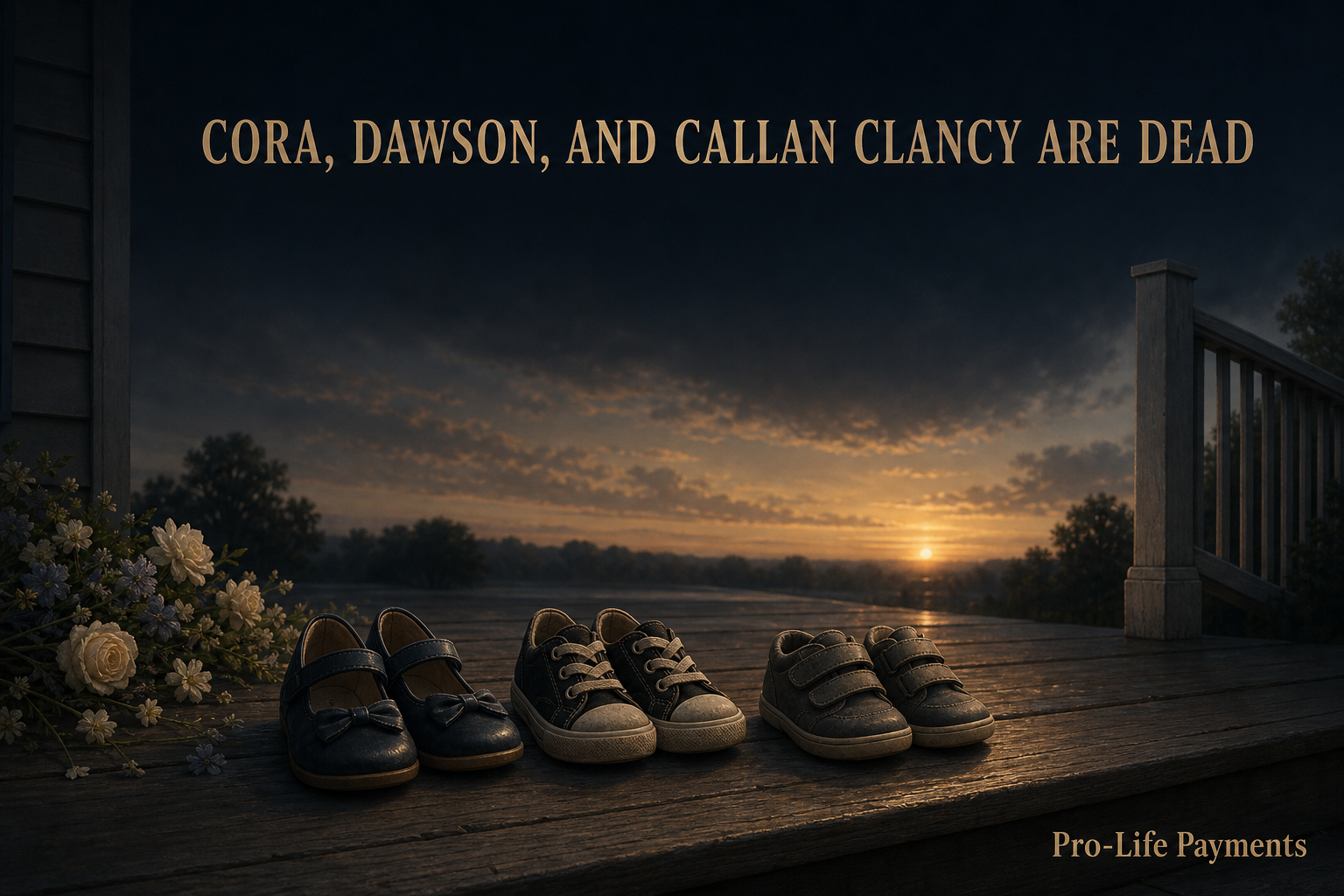
Cora, Dawson, and Callan Clancy are dead. Their deaths were not an abstraction, a social-media argument, or merely a clinical case study: prosecutors allege that their mother, Lindsay Clancy, intentionally killed them, while her defense contends that severe postpartum mental illness made her not criminally responsible. WBUR
The bottom line is that three children were killed. A humane society can take mental illness seriously, pursue every failure in a medical system, and still refuse to let the children’s names disappear behind adult-centered explanations.
Cora Clancy Was a Child, Not a Footnote
Cora Clancy was 5 years old when she died. Her name should not be relegated to the final line of a news story whose central concern becomes the alleged killer’s prescriptions, diagnosis, medical providers, and possible legal defense. Lindsay Clancy’s attorneys do not dispute that she killed Cora, Dawson, and Callan; the dispute at trial is whether she should be held criminally responsible because of an asserted mental condition. PBS NewsHour
That distinction matters. Explaining a claimed mental state is not the same as changing what happened to Cora. Compassion for a seriously ill person may be appropriate, but compassion becomes distorted when it requires the public to speak less plainly about the victim. Cora’s life had inherent worth, independent of her mother’s suffering, public sympathy, medical history, or trial strategy.
Must See Also: Profiles of Leading Life-Affirming Clinics: Expanding Women’s Healthcare Choices
Dawson Clancy Deserves Moral Clarity
Dawson Clancy was 3 years old. He did not have the vocabulary, platform, or power to tell the world what was done to him. Adults therefore have an obligation to tell the truth without euphemism: a child was killed, and the legal system is considering charges of first-degree murder. WBUR
Mental-health evidence is central to the case, and it should be evaluated rigorously, not dismissed. The reporting indicates that Lindsay Clancy had sought mental-health treatment and experienced depression, anxiety, insomnia, suicidal thoughts, and worries about harm coming to her children. Her defense alleges postpartum psychosis and medication-related deterioration; prosecutors argue that she acted deliberately. PBS NewsHour
But moral clarity begins with refusing to invert the story. Dawson was not an unfortunate casualty of a conversation about mental health. He was a little boy whose death demands both grief and justice. The question of legal responsibility belongs to the jury; the recognition that Dawson’s death was a profound wrong belongs to all of us.
Must See Also: Post-Birth — You Don’t Care?
Callan Clancy Was Not Expendable
Callan Clancy was 8 months old. He was alive when he arrived at a hospital after the attack and died three days later. PBS NewsHour His age should intensify—not dilute—our recognition of his humanity. He was entirely dependent on adults for protection, and he deserved that protection.
The case forces a difficult cultural question: What does it mean to defend mental health in an age when public discourse is often uncertain about the meaning of womanhood, motherhood, embodied sex, and the moral status of dependent human life? Mental-health care must acknowledge biological realities. Pregnancy, childbirth, breastfeeding, postpartum recovery, sleep deprivation, hormonal shifts, maternal attachment, and psychiatric vulnerability are not ideological concepts. They are real conditions that can require specialized, compassionate, urgent care.
At the same time, no society helps vulnerable women by speaking as if the destruction of dependent children is morally secondary. If we say that an unborn child may be discarded because he or she is dependent, inconvenient, unwanted, or burdensome, we risk weakening the moral instinct that every child—born or unborn—is someone to be protected. The pro-life conviction is not that mothers should be shamed for suffering. It is that mothers in crisis and their children both deserve care, protection, truth, and practical support.
Must See Also: Profiles of Leading Life-Affirming Clinics: Expanding Women’s Healthcare Choices
Mental Health Cannot Become an Excuse
Postpartum psychosis is described as a rare and dangerous psychiatric emergency that can involve an impaired connection to reality. That possibility deserves serious medical attention, and no one should treat psychiatric illness as a moral failure or as a reason to abandon a suffering mother. The 19th
Yet taking illness seriously does not require treating violence as unreal. The most honest framework holds two truths at the same time:
A woman experiencing psychiatric distress may need immediate clinical intervention, family support, safety planning, and protection from self-harm.
Children facing a credible risk of harm need immediate protection, even when the danger arises within their own home and even when the adult responsible is ill.
The tragedy surrounding Cora, Dawson, and Callan should push society toward better care before a crisis becomes catastrophic. That means listening when mothers report insomnia, despair, intrusive thoughts, loss of connection to reality, or suicidal thinking. It means clinicians, spouses, relatives, friends, churches, and communities must respond urgently when warning signs emerge. The public record indicates that Lindsay Clancy had sought several forms of mental-health care in the months before the killings, a fact that raises grave questions about assessment, treatment, supervision, and crisis intervention. WBUR
But prevention is not served by refusing to name the crime after it happens. The child-centered response is not cruelty toward the accused; it is fidelity to the truth.
Must See Also: GiveButter Loves LGBTQ+ Campaigns
Remember Their Names
Cora, Dawson, and Callan Clancy should be remembered as children whose lives mattered. Their story should provoke sorrow, a demand for better maternal mental-health care, careful examination of how families in crisis are supported, and a renewed commitment to protect children who cannot protect themselves.
A jury must decide the legal questions in Lindsay Clancy’s case. The reporting shows sharply contested claims: the defense alleges severe postpartum mental illness and lack of criminal responsibility, while prosecutors maintain that the killings were deliberate. PBS NewsHour We should not prejudge the jury’s verdict. But we also should not permit the public conversation to forget the central fact that is not disputed: three children are dead.
Their names are Cora, Dawson, and Callan Clancy. They deserved safety. They deserved protection. They deserved to live.
Must See Also: Pro-Life Payments — Christian Merchant Services