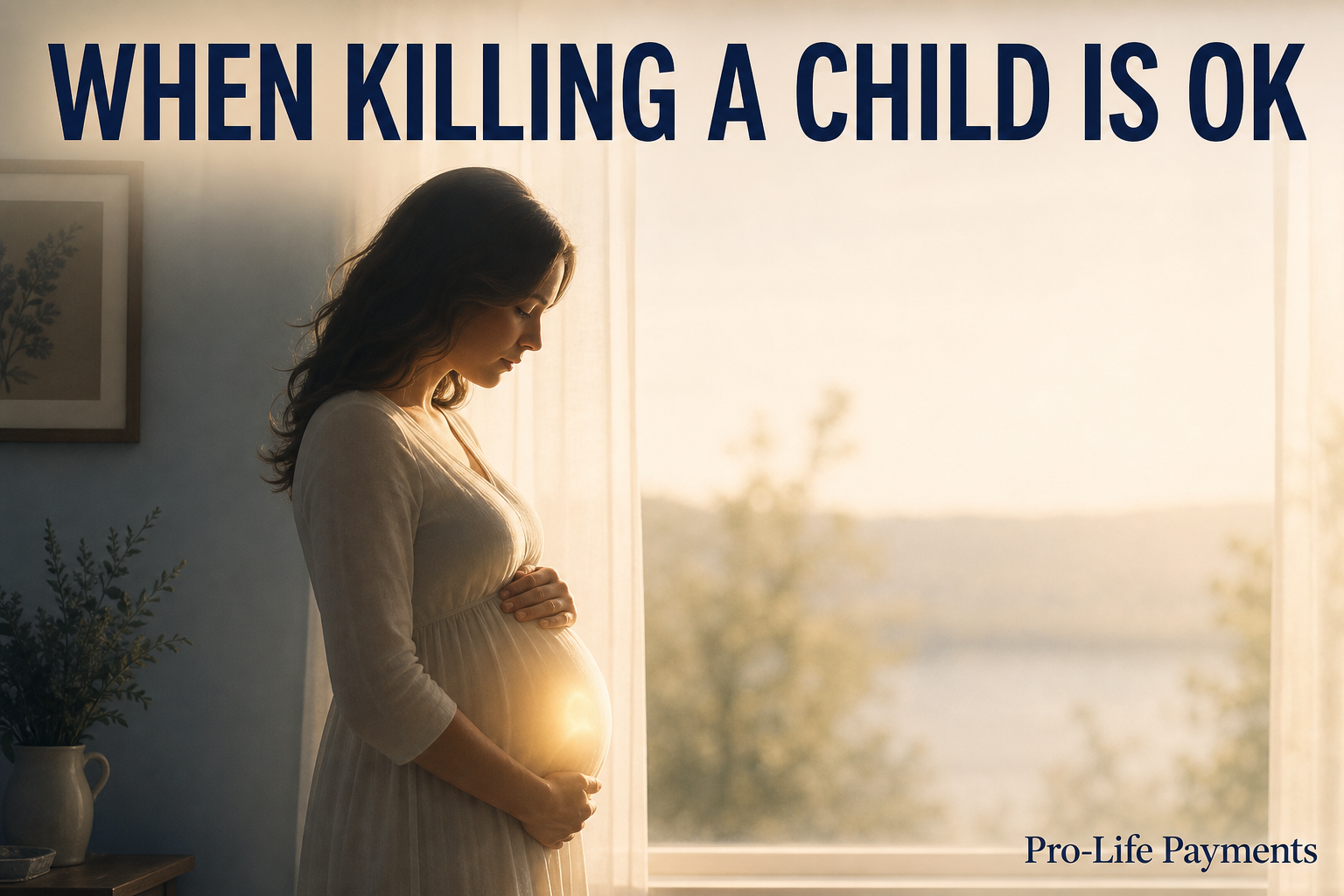
The Lindsay Clancy case forces a question that is difficult to ask but necessary to confront: if society treats the intentional ending of unborn human life as a protected choice, on what moral basis can it insist that the killing of a child is always unjustified once the child has crossed an arbitrary legal threshold?
The legal question in Lindsay Clancy’s trial is not whether three children died; it is whether she was criminally responsible at the time. Prosecutors argue that the killings were intentional, while the defense argues that a severe postpartum mental-health crisis left her unable to understand or control her actions. That distinction matters deeply in criminal law and in compassionate care for a mentally ill mother. But neither legal culpability nor mental illness changes the tragedy of the children’s deaths or erases their inherent worth. Lindsay Clancy trial: What to know about the testimony, postpartum psychosis, and the case
Must See Also: Post-Birth — You Don’t Care?
When Killing a Child Is OK: Law Is Not Morality
A legal definition identifies what the state will punish; it does not, by itself, establish what is morally right. History is full of conduct that was legal before it was recognized as profoundly unjust. Conversely, laws can be imperfect, inconsistently enforced, or shaped by political compromise. The fact that a government authorizes the intentional destruction of an unborn child under specified conditions cannot transform that act into a moral good simply because the law has drawn its line before birth.
That is the central pro-life claim: human dignity is not created by location, wantedness, developmental stage, dependency, age, or legal recognition. A child’s value does not suddenly appear when he or she passes through the birth canal. If the child is worthy of protection after birth because he or she is a living, vulnerable human being, then the same underlying dignity must matter before birth as well.
Must See Also: Core Christian Values: The Role of Pro-Life Payments in Promoting and Supporting Christian Family Values
When Killing a Child Is OK: The Problem With Legal Lines
Society commonly acknowledges that infants and young children deserve special protection precisely because they are dependent. They cannot feed, shelter, defend, or advocate for themselves. Yet unborn children are even more dependent, and that dependence is often used to deny rather than affirm their claim on us.
A law may distinguish between an unborn child at one gestational age and a newborn child one day later. It may permit abortion based on trimester, viability, health exceptions, or other conditions. But a change in legal status does not answer the moral question: what is the child, and what does that child deserve? If the answer is that the unborn child is a developing human life, then dependence on a mother’s body cannot be a sufficient reason to deny the child protection. Newborns remain radically dependent after birth; their dependency simply takes a different form.
This does not mean pregnancy is easy, that women’s fears are trivial, or that mothers in crisis should be condemned. It means a consistent society must respond to vulnerability with practical support—not with the elimination of the vulnerable person.
Must See Also: Profiles of Leading Life-Affirming Clinics Expanding Women’s Healthcare Choices
Lindsay Clancy and Compassion Without Confusion
The Clancy case also demands moral seriousness about maternal mental health. Postpartum psychosis is not a talking point. It is a grave psychiatric emergency requiring immediate medical attention, safety planning, family support, and compassionate treatment. Reporting on the trial has described the defense’s argument that Clancy experienced postpartum psychosis, while prosecutors contend she was criminally responsible for the deaths of Cora, Dawson, and Callan. The Lindsay Clancy trial and postpartum psychosis
We should resist two errors. The first is cruelty toward a suffering mother whose mental state may be central to determining legal responsibility. The second is allowing compassion for her suffering to become indifference toward the children who died. A humane response holds both truths together: mothers need robust mental-health care, and children—before and after birth—are not disposable.
The pro-life ethic should never be reduced to a demand that a woman carry a pregnancy and then be left alone. Real care includes prenatal health care, postpartum screening, counseling, safe housing, material aid, childcare, father involvement, and a network of people prepared to intervene when a mother’s mental health is deteriorating.
Must See Also: Get Fast Funding for Your Pro-Life Organization
When Killing a Child Is OK: A Culture’s Contradiction
The public horror at the killing of children is appropriate. It reveals something true: we recognize, instinctively and morally, that children are not objects and that their lives matter. The challenge is whether our convictions remain intact when the children are unseen, unborn, dependent, inconvenient, disabled, or unwanted.
A culture cannot coherently say that the intentional killing of a five-year-old, a three-year-old, or an infant is a terrible injustice while claiming that the intentional destruction of a younger child is morally neutral merely because the law permits it. The difference in size, location, and level of development may matter medically. It does not answer the fundamental moral question of whether the child has worth.
The law is important. It can restrain violence, protect the weak, and teach society what it should value. But law should follow moral reality rather than redefine it. Legal permission may shield an action from prosecution; it cannot make the taking of innocent human life morally justified.
Must See Also: Pro-Life Fintech — Pro-Life Christian Credit Card Processing
A Consistent Pro-Life Response
A consistent pro-life response rejects violence against children at every stage of life and refuses to abandon women in crisis. It calls for protection for unborn children, serious investment in maternal and postpartum mental-health care, support for fathers and families, and practical help for mothers facing fear, poverty, isolation, or coercion.
Pro-Life Payments presents one practical model of values-based action: it states that it directs 15% of its revenue to organizations working to protect unborn children and assist mothers in need. Pro-Life Fintech — Pro-Life Christian Credit Card Processing The point is not that payment processing alone solves the crisis. The point is that convictions should have consequences: businesses, churches, families, and communities can direct resources toward pregnancy support, life-affirming medical care, adoption assistance, and postpartum services.
The question is not whether the law can invent categories in which killing a child is permitted. It can. The more important question is whether those categories make the act morally right. They do not. If human dignity means anything, it must belong to the child before birth as surely as it belongs to the child after birth—and it must call us to protect mothers as well as their children.