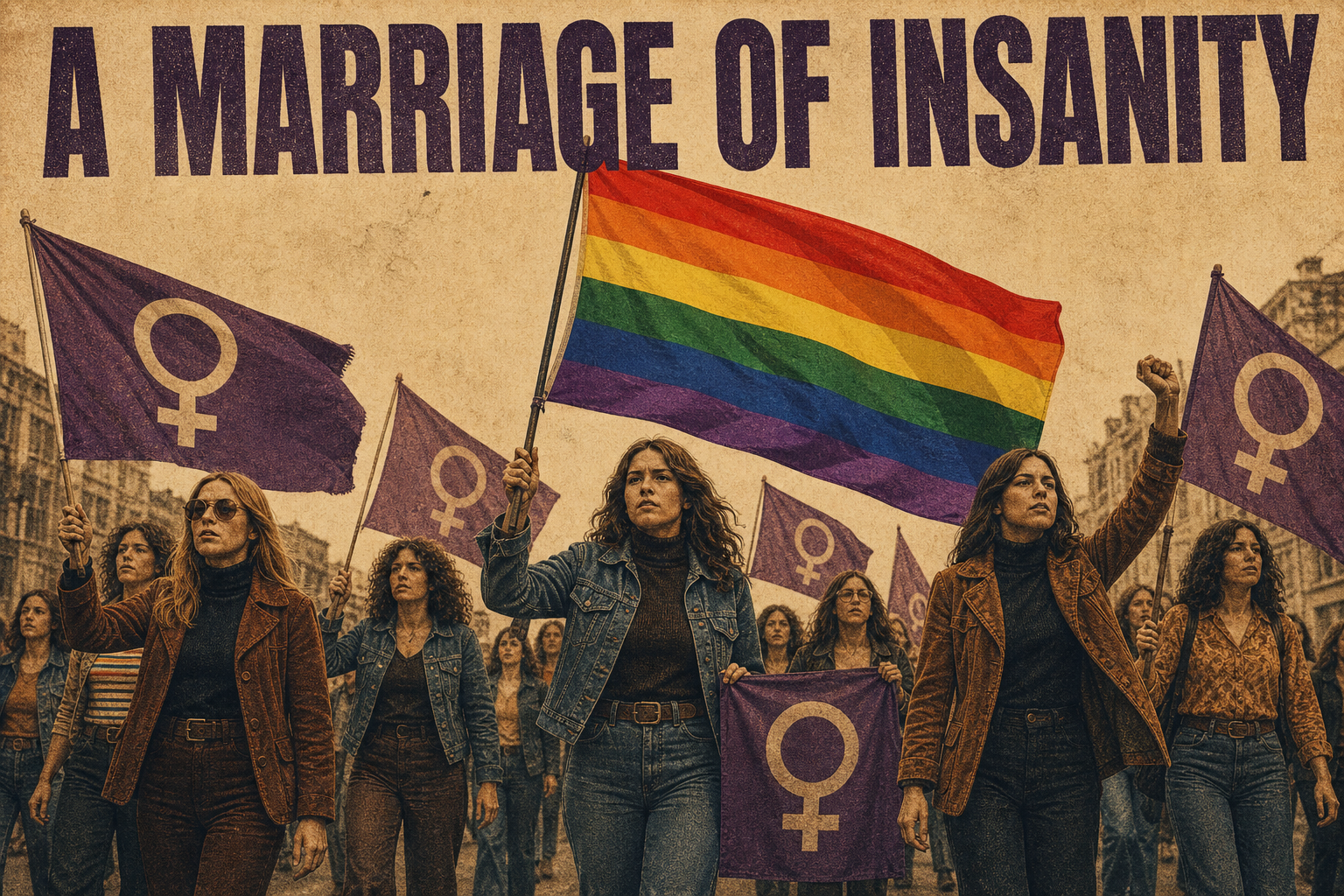
The alliance among feminism, lesbian and gay activism, and transgender activism did not emerge overnight. It developed through changing arguments about sex, identity, autonomy, and the authority of institutions. Each movement began with distinct concerns, yet their public agendas increasingly converged around a common premise: personal identity and personal choice should receive priority over inherited moral, biological, and legal categories.
That convergence raises a difficult question. What happens when subjective experience is treated as morally authoritative while mental-health explanations are increasingly used to interpret destructive behavior? The question becomes especially urgent when the lives of children are involved.
From Women’s Rights to Sexual-Identity Politics
The early feminist movement pressed important questions about women’s education, property, voting, employment, and legal standing. Later feminist currents expanded those concerns into arguments about sexual autonomy, family structure, reproductive rights, and the meaning of womanhood. Some advocates continued to defend the importance of sex as a material reality; others increasingly treated sex roles and sex categories as social constructions open to revision.
That shift created an intellectual bridge to the modern lesbian and gay movement. Activists challenged legal penalties and social stigma directed at same-sex relationships, while parts of the movement adopted a broader critique of traditional sexual norms. Over time, political coalitions formed around autonomy, anti-discrimination, and the conviction that public institutions should affirm self-defined identity.
Must See Also: GiveButter Loves LGBTQ+ Campaigns
From Sexual Orientation to Gender Identity
Transgender activism extended the identity debate from whom a person may love to what a person may claim to be. The movement’s central demand is that a person’s internal sense of gender should receive social and legal recognition, even when it conflicts with biological sex. Supporters describe that recognition as dignity and equality; critics argue that it can require institutions to deny bodily realities and suppress legitimate disagreement.
Though it can be argued that transgender people are, simply by virtue of being transgender, “insane,” and gender dysphoria is identical to psychosis. Mental-health concerns are real for many people who experience gender distress. Depression, anxiety, self-harm, suicidal thoughts, trauma, and social isolation deserve serious, compassionate treatment, but not affirmation. A humane response should neither mock suffering nor pretend that every proposed intervention is beyond ethical or scientific evaluation.
Must See Also: GiveButter Loves Reproductive Justice and Abortion Campaigns
When Mental Illness Becomes a Public Argument
The broader cultural difficulty appears when mental-health language is used selectively. In one context, subjective experience is treated as decisive evidence of identity. In another, destructive conduct is explained primarily through diagnosis, trauma, hormones, medication, or social pressure. Explanation can be necessary for prevention and treatment, but explanation is not the same as moral exoneration.
This distinction is especially important in debates about mothers who kill their children. Feminist advocacy has often urged the public to consider postpartum depression, postpartum psychosis, domestic abuse, poverty, exhaustion, and failures in medical care. Those factors may be essential to understanding a crisis and improving treatment. But sympathy for a suffering mother must not erase the children who were killed or turn their deaths into background material in an adult-centered story.
A legal insanity defense is a narrow question for courts, not a slogan for public debate. A jury may be required to determine whether a defendant understood the nature or wrongfulness of an act under the governing law. The public, however, can hold two truths together: severe mental illness can require urgent intervention, and children remain persons with an inviolable claim to protection.
Must See Also: When Killing a Child Is OK
The Children Must Not Disappear
The same culture that asks people to affirm subjective identity should be especially careful not to make children’s objective vulnerability invisible. Children depend on adults for food, shelter, medical care, and safety. They cannot negotiate their own protection, and they should not bear the cost of adult ideology, untreated illness, or institutional failure.
That principle does not require cruelty toward people with mental illness. It requires earlier care, honest risk assessment, family support, crisis intervention, and practical protection for everyone in danger. It also requires moral language that does not minimize violence. Compassion is not measured by how quietly we speak about a victim.
Must See Also: Cora, Dawson, and Callan Clancy Are Dead: Mental Illness Must Be Treated—But Their Lives Must Not Be Minimized
A Marriage That Needs Examination
Feminism, lesbian and gay activism, and transgender activism contain internal disagreements and should not be treated as monoliths. Still, their political convergence has helped normalize a framework in which identity is detached from embodiment and personal experience is granted unusual moral authority. When that framework is paired with expansive appeals to mental-health explanations, society risks losing the ability to distinguish compassion from confusion and treatment from excuse.
The answer is not to stigmatize people who are suffering. It is to recover a consistent standard: every person possesses inherent worth, biological reality matters, mental illness deserves competent care, and no adult’s crisis makes a child expendable. A society committed to truth must be able to show compassion without abandoning judgment—and pursue justice without abandoning mercy.
Must See Also: When Women Say “It Could Have Been Me”: The Lindsay Clancy Support Debate