
People can make a pro-life impact every day, not just at the ballot box.
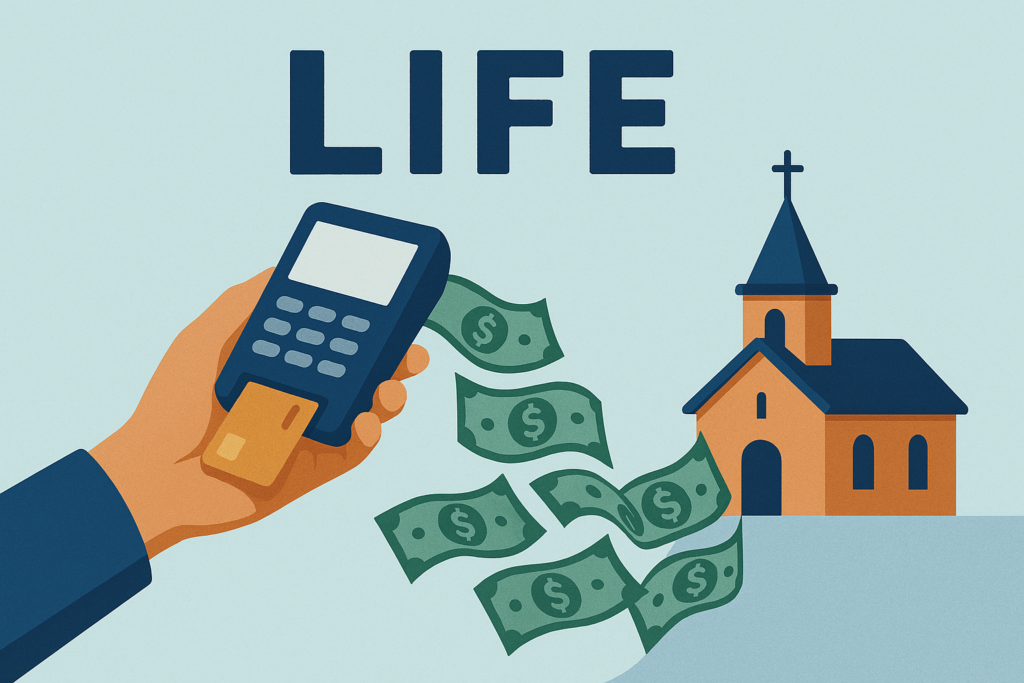
The polling station closes. Campaign signs come down. Election results fade from the headlines. For many pro-life Americans, advocacy seems to pause until the next election cycle—as though defending the unborn were a seasonal activity limited to voting booths and political rallies. Yet the machinery of abortion continues operating every single day, funded not primarily by government appropriations but by ordinary commerce flowing through financial systems that most Christians never scrutinize. The uncomfortable truth is that while pro-life voters cast ballots against abortion every few years, they may be funding Planned Parenthood with every credit card swipe through their choice of payment processor.
This creates a profound opportunity: if the infrastructure of abortion operates daily through financial transactions, then the defense of life can—and must—operate daily through those same channels. Christians already possess extraordinary power to vote pro-life every day through business decisions, vendor selections, and conversations that redirect economic flows away from death and toward life. The question is not whether pro-life Americans have influence, but whether they will exercise it beyond November.
Why Voting Pro-Life Daily Matters More Than Elections
Political victories remain essential, but they represent only one dimension of cultural change. Roe v. Wade stood for nearly five decades despite millions of pro-life votes cast in that period. Its reversal did not end abortion; it shifted the battlefield to state legislatures and corporate boardrooms where economic power now determines access. Major corporations responded to Dobbs not by respecting life but by offering abortion travel benefits to employees, effectively using shareholder and customer money to circumvent state protections for the unborn.
This corporate response reveals where real power lies in modern America: in the daily flow of transactions that fund institutions, shape culture, and determine which organizations thrive. Research on pro-life activism shows that most lasting change happens not through abstract political engagement but through personal relationships and daily actions in ordinary contexts. When pro-life Americans vote daily by choosing where their money flows, they activate economic leverage that no politician can match.

The pro-life movement must recognize that pregnancy resource centers, adoption agencies, and life-affirming ministries face chronic underfunding while Planned Parenthood maintains billion-dollar reserves through a combination of government grants and corporate donations. Closing that funding gap requires more than annual appeals; it demands structural changes in how pro-life individuals and organizations conduct daily business.
Must See Also: The Best Christian and Pro-Life Investments to Consider in Today’s Market
How to Vote Pro-Life Daily Through Payment Processing
The most immediate way to vote pro-life daily is to stop funding abortion through payment processors. Most churches, ministries, and Christian businesses process transactions through mainstream platforms like PayPal, Stripe, or Square without realizing these companies actively support abortion access. PayPal, which owns Venmo, signed the UN Women’s Generation Equality Forum commitment to ensure 50 million more women can access “safe and legal abortion” by 2026. Stripe donated to the ACLU to fight pro-life policies. Block (owner of Square and Cash App) covers voluntary abortions and short-term disability for gender-affirming surgeries as employee benefits.
Every percentage point these processors extract in fees represents resources diverted from ministry work—and worse, those fees flow to corporations actively working to expand abortion. The contradiction is stark: pro-life ministries working to save babies while simultaneously funding the infrastructure that kills them. This systemic problem affects thousands of churches and Christian businesses that unknowingly subsidize the culture of death through routine financial transactions.

The solution exists today. Pro-Life Payments (PLP) operates as the for-profit arm of the pro-life movement, offering payment processing that matches or exceeds mainstream competitors on features and pricing while dedicating 15% of gross revenue—not net profit, but total revenue—to pro-life organizations. This transforms payment processing from passive overhead into active ministry funding. A Christian bookstore processing $50,000 monthly in sales generates approximately $7,500 annually in processing fees. Through PLP, $1,125 of that (15% of gross revenue) flows directly to pregnancy resource centers and life-affirming ministries—automatically, perpetually, without additional decisions or fundraising campaigns.
The mathematics are compelling. Payment processing represents a mandatory cost of business; the only question is whether those fees support companies funding Planned Parenthood or organizations rescuing children from abortion. When a church processing $100,000 annually switches to PLP, it redirects approximately $1,500 yearly toward pro-life work. Over a decade, that single decision generates $15,000 in mission-aligned funding without increasing costs or reducing service quality. This is how pro-life individuals and organizations vote daily—by ensuring every transaction advances rather than contradicts their values.
Must See Also: From Wall Street to the Womb: Practical Pro Life Investing Opportunities for Everyday Believers
Voting Pro-Life Daily Without Paying More or Losing Features
One persistent barrier to values-aligned commerce is the assumption that moral consistency requires sacrifice—that choosing pro-life vendors means accepting inferior service, higher costs, or limited functionality. This assumption keeps countless Christian business owners locked into relationships with abortion-supporting processors despite genuine desire to align finances with faith. The assumption is false.
PLP provides comprehensive payment solutions including e-commerce, omni-channel, mobile, retail, restaurant, and donation management platforms specifically designed for faith-based communities. The company offers competitive rates matching mainstream processors, next-day or same-day deposits for improved cash flow, month-to-month contracts with no early termination fees, free equipment and POS rentals to minimize upfront costs, and support for various payment types from credit cards to ACH transfers. These features mirror what businesses expect from PayPal, Stripe, or Square—but with the critical difference that transaction fees fund life rather than abortion.
The pricing structure ensures businesses pay market rates while automatically generating pro-life impact. A business processing $10,000 monthly typically pays approximately $300 in processing fees regardless of provider. That $300 leaves the business either way; the only question is where it goes afterward. Through mainstream processors, a portion flows to corporate coffers that donate to Planned Parenthood. Through PLP, 15% of gross revenue (approximately $45 monthly from that $300 in fees) supports pregnancy resource centers and pro-life ministries. The business experiences no cost increase, no service reduction, and no operational disruption—yet generates $540 annually in automatic pro-life funding simply by redirecting an unavoidable expense.
This model works precisely because it requires no additional sacrifice from business owners. The Baby Saving Calculator demonstrates how existing transaction volumes translate into babies saved. A church processing $25,000 monthly in tithes and donations generates approximately $4,500 annually in pro-life funding through PLP without asking a single congregant for additional contributions. A Christian retail store processing $75,000 monthly contributes approximately $13,500 yearly to life-affirming work—purely as a byproduct of switching processors, not from reduced profits or increased prices.
The business case for switching becomes overwhelming when these numbers compound over time. A ministry processing $500,000 annually generates $7,500 in pro-life donations the first year through PLP, another $7,500 the second year, and $7,500 every subsequent year. Over a decade, that single vendor decision produces $75,000 in mission-aligned funding—far exceeding what most organizations donate through special appeals or fundraising campaigns. This is the power of structural rather than episodic giving: once the decision is made, the impact continues automatically as long as the business operates.
Must See Also: Pro-Life Payments Compounds Your Donations
How to Vote Pro-Life Daily by Asking Questions
Beyond personal vendor decisions, pro-life individuals possess extraordinary influence simply by asking businesses they patronize: “What payment processor do you use? Have you considered Pro-Life Payments?” This question, repeated across thousands of customer interactions, creates market pressure that redirects economic flows at scale. Consumer purchasing decisions increasingly reflect values, and businesses respond to customer demands more reliably than political speeches.
When a customer asks about payment processing, several dynamics occur simultaneously. First, the business owner—perhaps for the first time—considers whether their financial infrastructure aligns with stated values. Many Christian business owners genuinely do not know their processor supports abortion; they chose PayPal or Stripe for convenience without investigating corporate policies. The question surfaces information that enables informed decisions.
Second, the question signals that customers notice and care about values alignment. Business owners who fear losing pro-life customers if they continue using abortion-supporting processors face immediate economic incentive to switch. This represents democratic capitalism at its finest: consumers shaping markets through demand for products and services that reflect their convictions rather than contradict them.
Third, the conversation creates network effects. When a customer mentions PLP to a business owner, and that owner investigates and switches, the resulting transaction volume generates funding for pregnancy resource centers. If that business processes $200,000 annually, the switch produces $3,000 yearly in pro-life donations. But it also creates a visible example: other businesses in the community see a peer using PLP successfully, reducing perceived risk and accelerating adoption. One customer question can ultimately trigger a cascade of vendor changes across entire business networks.
Trusted advisors wield particular influence. Christian accountants possess unmatched credibility with small business clients, who trust their accountant more than family, friends, lawyers, or financial planners when making business decisions. When an accountant recommends PLP during routine financial reviews, clients typically follow that recommendation without extensive research. A single accountant with 50 small business clients who systematically recommends PLP can redirect $50,000 to $100,000 annually toward pro-life work—entirely from helping clients align unavoidable expenses with stated values.
Pastors, ministry leaders, and business association executives occupy similar positions of influence. When a pastor mentions from the pulpit that the church switched to PLP and encourages business owners in the congregation to investigate, the resulting transaction volume multiplies impact exponentially. When a Christian business association endorses PLP as the preferred processor for members, entire networks of enterprises redirect fees from abortion-supporting corporations to life-affirming organizations. This is how movements scale: through trusted voices amplifying aligned messages in contexts where listeners are predisposed to act.
Must See Also: How Christian Business Owners Can Make a Difference in the New Year
Vote Pro-Life Daily Through Simple Social Media Sharing
The pro-life movement suffers not from lack of sympathizers but from lack of activated sympathizers. Polls consistently show that roughly half of Americans identify as pro-life, yet this sentiment rarely translates into daily action beyond voting. Social media offers a low-barrier mechanism to activate this latent support by amplifying pro-life content that educates, equips, and mobilizes.
Sharing PLP blog posts on platforms like Facebook, Instagram, or X creates multiple downstream effects. First, it exposes Christian business owners to information about values-aligned alternatives they likely never knew existed. Second, it normalizes conversations about where transaction fees flow, making values-based vendor selection part of ordinary Christian stewardship rather than fringe activism. Third, it builds social proof: when multiple friends share content about PLP, it signals that values-aligned payment processing represents a mainstream rather than extreme position within the Christian community.
The content strategy should focus on education rather than shame. Blog posts explaining how mainstream processors fund abortion help Christians understand that neutrality does not exist in modern commerce—every transaction supports someone’s values, and the question is whether Christians will take responsibility for whose values their money advances. Articles demonstrating how switching to PLP generates automatic pro-life funding without increasing costs remove the assumption that moral consistency requires sacrifice. Stories quantifying impact through the Baby Saving Calculator translate abstract principles into concrete outcomes: “Our church saved 12 babies this year simply by changing payment processors.”
Churches can integrate this sharing into weekly communications. A brief announcement in the bulletin or newsletter: “We recently switched to Pro-Life Payments to ensure our transaction fees support life rather than abortion. Learn more at prolifepayments.com and share this with business owners you know.” Small groups can dedicate a session to values-aligned commerce, reviewing household and business expenses to identify vendors that contradict Christian convictions and researching alternatives. Youth groups can create social media campaigns challenging peers to vote pro-life daily through consumer choices.
The cumulative impact of thousands of Christians sharing pro-life content weekly would fundamentally reshape the information environment. Currently, most business owners default to mainstream processors because those are the only options they know exist. Saturating Christian social media feeds with information about PLP and similar values-aligned vendors creates awareness at scale, removing ignorance as a barrier to action. When combined with direct conversations and trusted advisor recommendations, this multi-channel approach activates the pro-life majority that currently remains dormant between elections.
Must See Also: The Top 5 Reasons Christians Should Switch to Pro-Life Payments
Voting Pro-Life Daily Starts at Church
Churches represent the most strategic leverage point for scaling pro-life daily action because they combine three essential elements: concentrated networks of pro-life sympathizers, trusted leadership with moral authority, and regular gatherings that facilitate communication and coordination. When a church embraces values-aligned commerce as a congregational priority, it can redirect millions of dollars annually from abortion-supporting institutions to life-affirming ministries—purely through vendor recommendations that help members align their finances with faith.
The first step is internal alignment. Churches should audit their own financial relationships to ensure transaction fees, banking services, and vendor contracts support rather than contradict the sanctity of life. When a church processes $150,000 annually in tithes and donations through PayPal or Stripe, it inadvertently funds corporations that donate to Planned Parenthood. Switching to PLP’s Pro-Life Prosper donation platform redirects approximately $2,250 yearly (15% of gross revenue) to pregnancy resource centers while eliminating the contradiction of preaching pro-life values while funding pro-abortion corporations.
This internal switch creates credibility for external recommendations. Pastors can speak authentically about values-aligned commerce when their own church practices what they preach. A simple announcement: “We switched to Pro-Life Payments to ensure our financial infrastructure supports the values we proclaim from this pulpit. Every transaction now generates funding for ministries that rescue children from abortion. We encourage business owners in our congregation to investigate whether their payment processors align with their convictions—and we’re happy to share what we learned during our transition.”
Churches can go further by creating practical support structures. A “pro-life business network” connecting Christian entrepreneurs within the congregation facilitates peer learning, vendor referrals, and collective problem-solving around values alignment. A resource library featuring articles on flexible payment processing and case studies of businesses that switched successfully reduces perceived barriers. Regular prayer for pro-life businesses and ministries in the congregation reinforces that commerce represents kingdom work deserving spiritual support, not merely secular activity separate from faith.
Youth and family ministries can integrate values-aligned commerce into discipleship. Teaching teenagers that consumer choices constitute daily votes trains the next generation of Christians to exercise economic stewardship from the beginning of their financial lives. Family devotionals exploring where household expenses flow—from streaming services to grocery stores to payment processors—help children understand that faithfulness extends beyond personal morality to systemic questions about which institutions Christian money strengthens.
The aggregate impact of church-led values alignment becomes staggering at scale. A congregation of 200 families containing 40 small businesses that collectively process $8 million annually represents $120,000 in potential pro-life funding simply by switching to PLP—without a single family increasing giving or reducing expenses. When multiplied across thousands of churches nationwide, this approach redirects hundreds of millions of dollars annually from abortion-supporting corporations to pregnancy resource centers, adoption agencies, and life-affirming ministries. This is how the pro-life movement achieves financial sustainability: not through endless fundraising appeals, but through structural decisions that convert ordinary commerce into perpetual ministry support.
Must See Also: Pro-Life Payments Donates 15% of its Gross Revenues to Your Pro-Life Ministry
Vote Pro-Life Daily: The Compound Effect
The power of voting pro-life daily lies in its compound nature. Traditional pro-life engagement resets to zero each election cycle; volunteers mobilize, votes are cast, results are tallied, and then everyone returns to normal life until the next campaign. This episodic approach creates exhaustion without building lasting infrastructure. In contrast, values-aligned vendor decisions compound over time, creating growing impact that operates independently of political cycles, economic downturns, or donor fatigue.
When a business switches to PLP, it establishes a permanent funding stream to pro-life organizations that continues as long as the business processes transactions. This creates what financial analysts call “annuity-like” revenue for ministries—predictable, recurring income that allows strategic planning, staff hiring, facility expansion, and long-term program development rather than hand-to-mouth dependence on volatile donor behavior. Pregnancy resource centers receiving consistent monthly funding from hundreds of businesses using PLP can budget confidently, knowing that transaction volume provides stable baseline revenue regardless of economic conditions or political climate.
The compound effect accelerates as more businesses join the PLP network. Each new business adds its transaction volume to the collective funding stream, increasing total pro-life donations proportionally. When 100 Christian businesses process $10 million annually through PLP, they generate $150,000 in life-saving funding. When 1,000 businesses processing $100 million join, funding reaches $1.5 million annually—purely from redirecting unavoidable business expenses, not from asking anyone to sacrifice profits or pay higher fees. This scalability distinguishes structural giving from episodic donations: the former grows exponentially through network effects, while the latter requires linear increases in fundraising effort.
The psychological benefits prove equally valuable. Business owners who switch to PLP report increased satisfaction knowing their daily operations actively advance rather than contradict their values. Churches that recommend PLP strengthen congregational unity around tangible pro-life action that requires minimal time or money beyond initial vendor changes. Accountants who systematically recommend values-aligned vendors to clients demonstrate professional integrity that reinforces trust and deepens client relationships. These intangible benefits—purpose, coherence, trust—create motivation that sustains long-term commitment where guilt-driven appeals eventually fail.
The compound effect ultimately transforms the economic foundation of the pro-life movement. Currently, most pregnancy resource centers and pro-life ministries depend on annual appeals to donors who must be resolicited each year with no guarantee of renewal. This creates chronic instability that limits strategic capacity and forces ministries into reactive rather than proactive postures. When hundreds of thousands of businesses redirect payment processing to PLP, they establish a multi-billion-dollar foundation of recurring revenue that operates regardless of political outcomes, cultural trends, or donor sentiment. This is how the pro-life movement achieves financial independence: through the accumulated daily decisions of millions of Christians who choose to vote pro-life not just at ballot boxes, but through every transaction.
Must See Also: How to Invest in Christian Companies: Research Tips, Red Flags, and Real‑World Examples
Conclusion: Your Daily Vote Matters
The myth of political neutrality perpetuates moral complacency. Every payment processor supports someone’s values—the question is whose. When Christians default to mainstream processors, they vote daily for corporations that fund Planned Parenthood, donate to abortion advocacy groups, and offer abortion travel benefits to employees. This represents not neutrality but active complicity, subsidizing the culture of death through routine financial transactions while simultaneously claiming to cherish life.
The alternative exists today. Pro-Life Payments enables Christians to align their financial infrastructure with their faith, transforming mandatory business expenses into automatic ministry funding without paying more or losing features they love. Switching payment processors takes a few hours. The resulting impact lasts for decades, generating thousands or even millions of dollars in cumulative support for pregnancy resource centers, adoption agencies, and life-affirming organizations.
But individual action alone cannot achieve movement-scale transformation. The pro-life community must embrace collective responsibility: asking businesses about their payment processors, sharing educational content on social media, recommending values-aligned vendors to friends and clients, discussing these issues at church, and holding each other accountable to live pro-life not just at ballot boxes but through every financial decision. This is how Christians vote pro-life daily—not through politicians, but through the accumulated power of millions of everyday choices that redirect economic flows away from death and toward life.
The polling station remains important. But it opens only occasionally, while the daily vote happens with every transaction. Pro-life Americans who limit their advocacy to November surrender 364 days each year to institutions that use their money to expand abortion access. Those who embrace values-aligned commerce vote pro-life daily, ensuring that every swipe, every click, and every payment actively defends the unborn. The power has always been there. The question is whether Christians will exercise it.
Calculate your impact today. Visit the Baby Saving Calculator to see how many babies your business could help save simply by switching to Pro-Life Payments. Share this article with business owners in your network. Ask your church leadership whether congregational finances align with pro-life values. Start voting pro-life daily—because the children waiting to be born cannot wait for the next election.
Must See Also: Would You Run into a Burning Building to Save Your Aborted Baby?