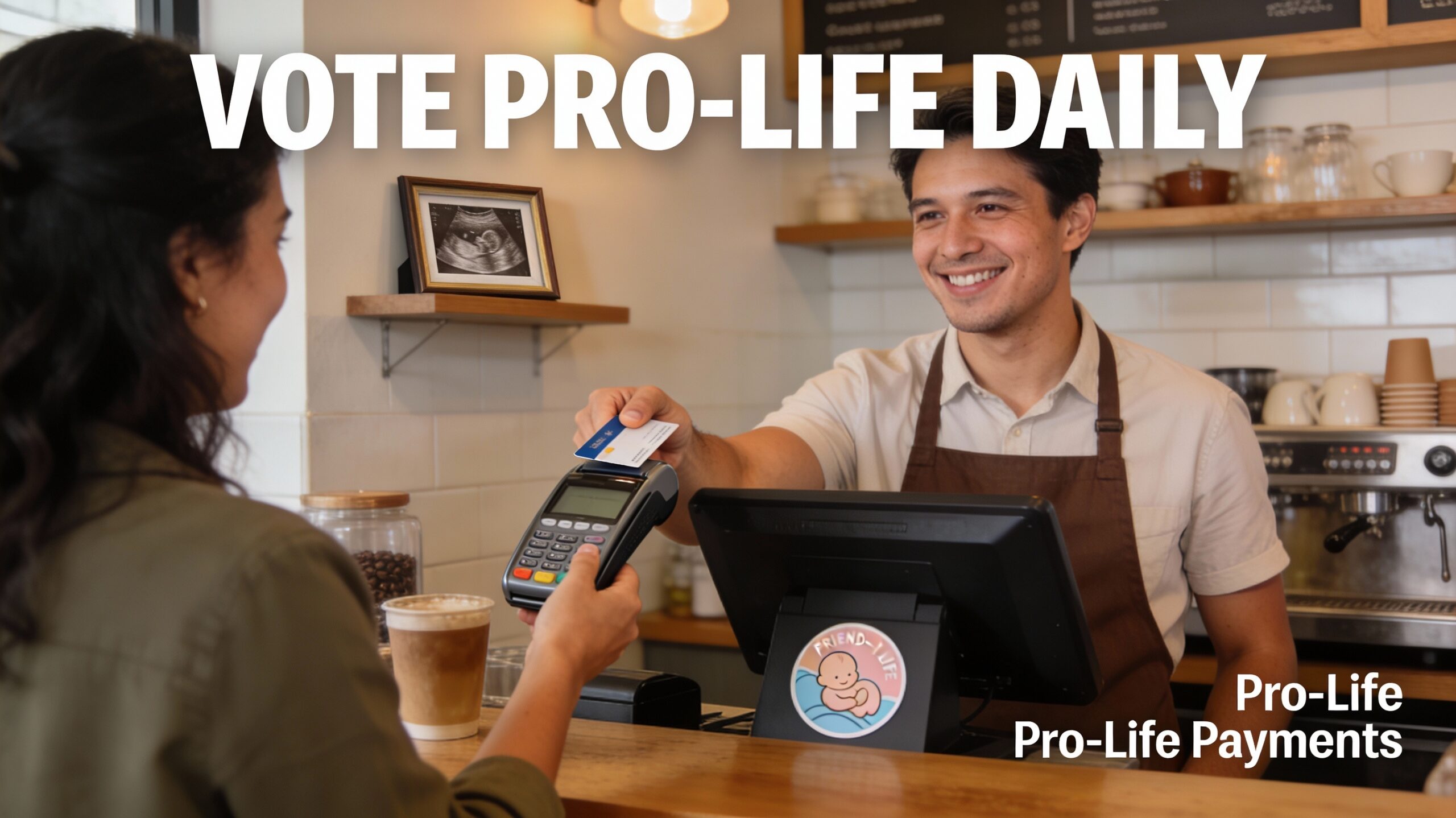
Pro-life consumers wield extraordinary market influence by voting pro-life daily with their purchasing and financial decisions, directing money toward companies that support life and away from those funding abortion.
Understanding the Power to Vote Pro-Life Daily Through Every Purchase
Every transaction represents a choice—not just about what to buy, but about which values to amplify and which institutions to empower. When pro-life consumers vote with their wallets, they exercise a form of democracy that operates 365 days per year, not just during election cycles. This concept, known as dollar voting, refers to the theoretical and practical impact of consumer choice on producers’ actions through the flow of consumer payments. Unlike political elections where individual votes can feel insignificant, consumer purchasing decisions create immediate market signals that corporations cannot ignore.
The foundation of this power lies in a simple economic reality: businesses exist to serve consumers, and when consumer preferences shift, corporate strategies must adapt to remain viable and profitable. Research from the conscious consumer movement demonstrates that shoppers are voting with their wallets for the kinds of businesses they want in the world, paving the way toward a more sustainable and value-aligned economy. For pro-life consumers, this means every credit card swipe, every vendor selection, and every financial commitment represents an opportunity to vote pro-life daily—reinforcing companies that respect the sanctity of life while withdrawing support from those that fund abortion.
The marketplace responds to aggregated consumer behavior with remarkable sensitivity. When enough individuals redirect their dollars, companies experience tangible consequences that exceed the impact of political lobbying or public relations campaigns. Boycotts can still be remarkably effective in dinging firms’ reputations, especially since the advent of social media, which reduces the costs of both expression and coordination for protestors. The inverse—buycotts, where consumers intentionally support values-aligned companies—creates equally powerful incentives by rewarding businesses that demonstrate environmental or ethical responsibility. For the pro-life consumer, this dual strategy means simultaneously defunding abortion-supporting corporations while building the economic infrastructure that sustains life-affirming alternatives.
Must See Also: Are You a Pro-Life Business Owner? There is a 99% Chance You are Funding Abortion or Woke Ideology Through Your Payment Processor

How Consumer Decisions to Vote Pro-Life Daily Shape Corporate Behavior
Corporate behavior responds more reliably to customer demand than to political pressure because revenue directly determines corporate survival. Companies track consumer sentiment through purchasing patterns, market research, and sales data with sophisticated analytics systems that identify trends in real time. When a significant portion of consumers voice concerns through their wallets, corporations are compelled to listen and adapt their policies, partnerships, and public positions. This dynamic creates what economists call “consumer sovereignty”—the principle that consumer choices ultimately determine what gets produced and how resources are allocated.
The mechanism through which consumers vote pro-life daily operates at multiple levels. At the transactional level, each purchase sends data to retailers about which products succeed and which fail. At the company level, sustained boycotts or buycotts impact quarterly earnings, stock prices, and executive compensation tied to performance metrics. At the industry level, widespread consumer rejection of certain practices forces entire sectors to reconsider their approaches. Corporate boycotts are now a fact of life for many companies, and although harsh financial impacts may be rare, boycotts carry significant reputational risks with long-term consequences that are no less important than immediate financial ones.
Research on corporate social responsibility reveals that 81% of Gen Z consumers have changed their purchasing decisions based on brand actions or reputation, with 53% participating in economic boycotts. This generational shift demonstrates that values-based purchasing is becoming normalized across demographics. For pro-life consumers, this trend creates opportunities to join a broader movement of ethical consumerism while maintaining focus on life-affirming principles. The fear of reputation damage often proves a greater determinant of corporate policy changes than fear of lost sales, as companies expend significant resources establishing customer relationships that boycotts sever in dramatic ways.

The evidence shows that when consumers vote pro-life daily, they tap into mechanisms that extend far beyond individual transactions. Boycotts typically create social change by triggering a large media frenzy around the company, generating negative spotlight and accompanying reputational threats that cause companies to listen to activists. This amplification effect means that coordinated consumer action by even a minority of customers can generate disproportionate impact when strategic, public, and sustained.
Must See Also: Payments Industry Values Incompatible with Christian, Pro-Life Values
The Aggregate Economic Power When Consumers Vote Pro-Life Daily
Pro-life consumers represent substantial purchasing power that corporations cannot afford to dismiss. Faith-based businesses alone contribute $437 billion annually to the U.S. economy, with total socio-economic value reaching $1.2 trillion when broader religious contributions are considered. Globally, this figure is projected to reach $449.99 billion by 2026 with a compound annual growth rate of 6.4%. This economic footprint establishes pro-life and faith-driven consumers as a market segment with extraordinary influence when mobilized strategically.
The key to maximizing this influence lies in recognizing that purchasing power multiplies through network effects. When a single consumer switches from an abortion-supporting payment processor to a pro-life alternative, that individual action matters. But when that consumer recommends the alternative to five other businesses, and those businesses each process thousands of transactions monthly, the cumulative impact scales exponentially. This ecosystem effect creates what economic analysts describe as economic circulation within value-aligned business communities, where dollars circulate multiple times before leaving the ecosystem, multiplying Kingdom impact with each transaction.

Consumers who vote pro-life daily benefit from understanding where their money flows after purchase. Mainstream payment processors like PayPal, Stripe, and Square extract 2-4% of every transaction in processing fees, and these fees flow to financial giants actively bankrolling Planned Parenthood and progressive causes. A business processing $50,000 monthly generates approximately $18,000 in annual fees—resources that either fund abortion advocacy or support pregnancy resource centers, depending on which processor handles the transactions. Over five years, that cumulative total reaches $90,000 in fees directed toward one cause or another, making processor selection one of the most consequential financial decisions a business makes.
The aggregate purchasing power of pro-life consumers extends beyond direct product purchases to encompass financial services, insurance providers, investment portfolios, and supply chain relationships. Top companies that donate to Planned Parenthood depend on pro-life customers to stay in business, yet many consumers unknowingly fund abortion every time they shop with these retailers. The contradiction is stark: individuals marching for life on Saturday while shopping at stores on Sunday that donate millions to abortion providers. When consumers vote pro-life daily across all spending categories, they redirect billions in aggregate purchasing power away from the abortion industry.
Must See Also: Christian Merchant Services: Pro-Life Payments Company Profile
Vote Pro-Life Daily: Continuous Economic Activism Beyond Elections
Electoral politics operates on two-year, four-year, and six-year cycles that impose waiting periods between opportunities to influence policy. Consumer activism faces no such constraints. Every day presents dozens of opportunities to vote pro-life daily through purchasing decisions, vendor selections, and financial commitments. This continuous nature of economic activism makes it more impactful than traditional voting for individuals seeking to be catalysts for change. As individuals, the most impactful action we can take occurs not every two years but every single time we open our wallets and make a purchase.
The advantage of daily economic voting lies in its immediacy and cumulative effect. Political campaigns require voters to evaluate candidates based on promises about future actions, with little recourse if elected officials reverse positions after assuming office. In contrast, when consumers vote pro-life daily, they create immediate consequences: revenue increases for values-aligned businesses and decreases for abortion-supporting corporations. These market signals register instantly in corporate dashboards, quarterly reports, and strategic planning sessions. Unlike political promises, market feedback is unambiguous, measurable, and impossible to spin.
Consider the contrast between traditional charitable giving and embedded commerce-based support. A pro-life organization might donate $5,000 once to a local pregnancy center—an act of generosity requiring stewardship and re-solicitation the following year with no guarantee of renewal. The same organization, when it chooses to vote pro-life daily by processing payments through Pro-Life Payments, automatically generates ongoing funding year after year without additional effort. This model converts one-time, voluntary donors into permanent, operational partners, creating funding streams that operate independently of economic downturns, donor fatigue, or fundraising cycles.
The continuous nature of voting pro-life daily also builds momentum that electoral cycles cannot match. In a supply-and-demand economy, consumers have total power—the more we demand products that support greater social and environmental justice, the more the market supplies those products. For pro-life consumers, this means every transaction contributes to cultural transformation by making life-affirming commerce profitable and abortion-supporting commerce costly. Over months and years, these daily votes accumulate into market trends that reshape corporate behavior, industry standards, and cultural norms surrounding the sanctity of life.
Must See Also: Our Choices in the Checkout Do Not Echo Beyond the Register
Practical Ways to Vote Pro-Life Daily With Financial Decisions
Translating conviction into action requires concrete strategies for voting pro-life daily across spending categories. The most immediate opportunity lies in payment processing—the financial infrastructure that handles credit card transactions, online donations, and peer-to-peer payments. Most Christian and pro-life organizations unknowingly use processors that actively support abortion through corporate donations to Planned Parenthood, employee abortion travel benefits, and political lobbying for abortion access. Switching to values-aligned alternatives like Pro-Life Payments redirects mandatory processing fees from hostile institutions to allied ones, creating what might be termed “values insurance” against ideological deplatforming.
Banking relationships represent another high-impact area where consumers can vote pro-life daily. Major banks donate millions annually to abortion advocacy organizations while providing credit facilities that enable abortion clinic expansion. Faith-based credit unions and Christian banking alternatives offer comparable services—checking accounts, savings accounts, loans, and mobile banking—while ensuring deposits support life-affirming community development rather than abortion funding. The switch requires minimal effort but creates maximum impact, as deposits become the capital base that determines which businesses receive financing.
Investment portfolios offer opportunities to vote pro-life daily through capital allocation decisions. Many pro-lifers are actually funding and profiting from the abortion industry through their investments without realizing it, as mainstream mutual funds and index funds hold positions in pharmaceutical companies manufacturing abortion drugs, hospital systems performing abortions, and technology platforms facilitating telemedicine abortions. Biblically responsible investment (BRI) funds screen holdings to exclude abortion providers, applying pro-life criteria systematically across portfolios. Financial advisors specializing in values-aligned investing can restructure retirement accounts, 529 plans, and brokerage accounts to vote pro-life daily through investment returns.
Supply chain decisions for businesses and organizational purchasing for nonprofits extend the capacity to vote pro-life daily into operational infrastructure. Selecting vendors based on values alignment—office supplies, technology services, insurance providers, professional services—ensures that procurement budgets strengthen the pro-life ecosystem rather than funding opposition. The economic circulation within Christian business communities multiplies Kingdom impact when dollars circulate through multiple values-aligned transactions before leaving the ecosystem. A church that banks with a Christian credit union, processes donations through Pro-Life Payments, purchases supplies from Christian wholesalers, and contracts with Christian service providers creates compounding pro-life impact through each spending decision.
Must See Also: A Viable Faith-Based Alternative to Stripe
Building a Movement of Consumers Who Vote Pro-Life Daily
Individual consumer decisions become movements when coordinated through networks that share information, establish standards, and create accountability. The rise of values-aligned shopping platforms connects consumers with businesses that uphold biblical principles and conservative values, functioning as discovery engines that help Christian shoppers find everything from household goods to professional services from vendors who share their worldview. These platforms create ecosystems where faith-based businesses thrive without compromising convictions, transforming values from potential liabilities into competitive advantages.
Social media amplifies the impact of consumers who vote pro-life daily by reducing coordination costs for boycotts and buycotts. When a major corporation announces abortion travel benefits, pro-life consumers can organize responses within hours through Facebook groups, Twitter threads, and email lists that mobilize thousands to redirect purchasing immediately. The same networks celebrate businesses that take pro-life stands, generating publicity that attracts new customers and rewards courage. This bidirectional signaling—punishing abortion support while rewarding life affirmation—creates clear incentives that shape corporate calculations about policy positions.
Educational initiatives that help consumers vote pro-life daily must address the gap between conviction and awareness. Research shows that 99% of people believe their choices in the checkout don’t echo beyond the register, consuming mindlessly in a swipe-and-go society. Closing this awareness gap requires tools like baby-saving calculators that quantify impact, vendor directories that identify values-aligned alternatives, and comparison charts that demonstrate competitive pricing for pro-life options. When consumers understand that switching payment processors costs nothing while generating thousands in annual pro-life funding, adoption barriers disappear.
The movement to vote pro-life daily gains strength from transparency and accountability mechanisms that verify corporate commitments. Third-party certification systems, public financial disclosures showing donation allocations, and testimonials from pregnancy centers receiving support build trust that distinguishes authentic values alignment from marketing opportunism. Pro-Life Payments demonstrates this transparency by committing 15% of gross revenue—not just profits—to pro-life ministries, a commitment verified through financial disclosures that represent a 12.5x greater proportional investment in social impact compared to standard corporate philanthropy averaging 1.2% of profits.
Must See Also: Boost Your Customer Service with Pro-Life Payments
The Compounding Impact When You Vote Pro-Life Daily
The mathematics of compound impact reveals why daily economic activism surpasses episodic charitable giving. A business that processes $10,000 monthly through conventional processors generates approximately $3,000 in annual fees that flow to abortion-supporting financial institutions. Switching to Pro-Life Payments redirects those fees such that $450 annually (15% of processor revenue) funds pregnancy resource centers, adoption agencies, and life-affirming ministries. Over five years, that single switch generates $2,250 in cumulative pro-life funding from transaction volume held constant—equivalent to the impact of a substantial one-time donation.
The compounding accelerates when transaction volumes grow alongside business expansion. A business that starts at $10,000 monthly and grows 10% annually reaches $19,500 monthly by year five, generating $2,900 in cumulative pro-life funding over that period through payment processing alone. The funding happens automatically as a feature of operational infrastructure, requiring zero additional fundraising effort while producing exponentially more impact than manual donation processes subject to donor fatigue. If payment processing fees represent an unavoidable cost of conducting business, the strategic question becomes where those fees should flow—toward institutions funding abortion or organizations saving lives.
Network effects multiply impact beyond individual business decisions. When a business owner who votes pro-life daily recommends values-aligned processors to five peers, and those peers each generate $20,000 monthly in transaction volume, the collective impact reaches $18,000 in annual pro-life funding from that single recommendation. If each of those five makes similar recommendations, the network scales to 25 businesses generating $90,000 annually in pro-life funding—all from infrastructure choices that cost participants nothing extra. This ecosystem effect demonstrates how consumer decisions create exponential rather than linear scaling when coordinated through values-aligned networks.
The defensive value of voting pro-life daily through processor selection extends beyond immediate funding impact. Organizations ranging from the American Family Association to conservative media platforms have experienced sudden account cancellations, forcing scrambles to find alternative processors, migrate customer data, and restore payment functionality—often with significant revenue loss during transition. Pro-life businesses that vote pro-life daily by partnering with processors sharing their values eliminate ideological deplatforming risk, creating operational security that functions as both offensive weapon (channeling funds to life-affirming work) and defensive shield (protecting businesses from cancel culture).
Must See Also: The Top 5 Reasons Christians Should Switch to Pro-Life Payments
Integrating the Decision to Vote Pro-Life Daily Into Broader Values-Aligned Commerce
The choice to vote pro-life daily through purchasing decisions fits within a comprehensive approach to faith-based commerce that integrates Christian values into business success. When businesses operate with integrity, fairness, and a heart for service, they transcend traditional commerce and become platforms for ministry and positive societal impact. Payment processing represents one component within broader operational infrastructure that includes hiring practices, vendor relationships, marketing strategies, and community engagement—all of which present opportunities to vote pro-life daily through values-aligned choices.
The rise of values-aligned shopping represents a fundamental shift in American commerce, as consumers increasingly want to know not just what they’re buying, but who they’re buying from and what those businesses stand for. For Christian entrepreneurs and faith-based companies, this cultural moment presents unprecedented opportunities to connect with customers who share their values. This isn’t simply about boycotting companies with opposing viewpoints—it represents a proactive approach to commerce that seeks out and supports businesses actively upholding faith-based values. Christian consumers voting pro-life daily ask: Does this company respect religious freedom? Do they support pro-life causes? Are they committed to traditional family values? Do they operate with biblical integrity?
Integration of pro-life voting into daily commerce requires businesses to make values visible through operational transparency. This includes displaying mission statements that articulate faith commitments, partnering exclusively with values-aligned suppliers, communicating donation allocations through financial reports, and celebrating the ministry impact generated through customer transactions. When customers see that businesses prioritize working with payment processors that align with their values, it enhances the overall customer experience and establishes positive brand image that differentiates from competitors. The combination of exceptional customer service, seamless payment experience, and shared values ultimately boosts business success.
The ecosystem approach to voting pro-life daily recognizes that dollars circulating within the Christian business community multiple times create compounding Kingdom impact. A Christian retailer processes payments through Pro-Life Payments, generating pro-life donations. That retailer banks with a Christian financial institution, invests retirement funds through biblically responsible investment advisors, and purchases supplies from Christian wholesalers—each transaction supporting faith-affirming economic activity. The aggregated impact of these coordinated decisions far exceeds what isolated individual actions achieve, demonstrating the power of comprehensive values alignment across business operations.
Must See Also: Christian Nonprofit Merchant Services: Sustainment for Pro-Life Organizations
Taking Action Today: Start Voting Pro-Life Daily With Your Next Transaction
The decision to vote pro-life daily begins with a single action: evaluating current financial relationships against pro-life principles. Business owners and organizational leaders should audit payment processors, banking institutions, investment accounts, insurance providers, and major vendors to identify which relationships fund abortion advocacy. This assessment reveals where immediate changes produce maximum impact—typically payment processing, since switching costs nothing while redirecting substantial ongoing fees from abortion-supporting institutions to life-affirming alternatives.
The practical steps for voting pro-life daily through payment processing involve minimal disruption. Pro-Life Payments offers competitive rates that match or beat PayPal, Stripe, and Square while providing comprehensive services: e-commerce solutions, omni-channel payments, mobile card readers, retail and restaurant point-of-sale systems, ACH transactions, and donation management software. Businesses receive next-day funding, month-to-month contracts with no early termination fees, free equipment rentals, and seamless integration with platforms like QuickBooks. The switch requires one application and minimal technical implementation, after which every transaction automatically generates pro-life funding through the processor’s commitment to donate 15% of gross revenue to life-affirming organizations.
For individual consumers voting pro-life daily, the action plan includes researching companies before purchasing, prioritizing small businesses owned by Christians, supporting retailers that publicly affirm pro-life values, and divesting from corporations donating to Planned Parenthood. Online directories and values-aligned shopping platforms simplify this research by curating vendors based on faith commitments and pro-life positions. When pro-life alternatives don’t exist in particular product categories, consumers can contact corporate customer service departments to request values-aligned policies, creating market demand that companies must address in strategic planning.
The urgency of voting pro-life daily stems from recognition that corporate money funds political and cultural revolution, and every recurring fee, every processing percentage, contributes to someone’s mission. When that mission explicitly includes expanding abortion access and opposing Christian sexual ethics, believers cannot shrug and say “that’s just how payments work.” Churches, ministries, and Christian businesses have a positive duty not only to oppose abortion rhetorically but to redirect their financial infrastructure toward life-honoring alternatives. The question is no longer whether pro-life alternatives exist—the question is whether Christians will prioritize convictions over convenience and make the switch that turns every transaction into votes for life.
Must See Also: You Can’t Unsee It—And You Can’t Sleep Until You Act