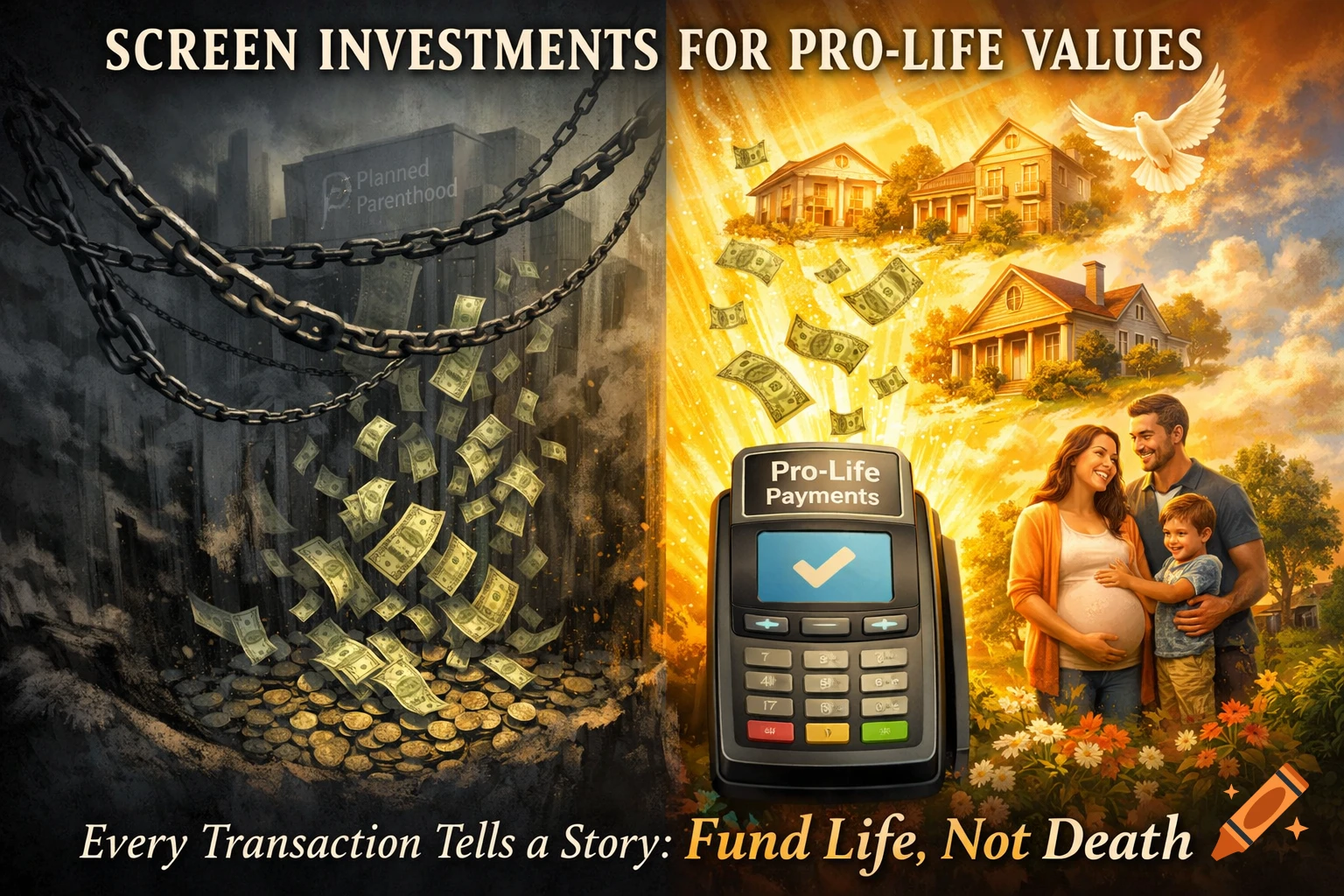
Tools, Questions, and Red Flags to Watch
To screen investments for pro-life values, Christian businesses must trace every financial relationship—from banks to processors like Pro-Life Payments—and intentionally choose those that actively invest in the pro-life movement instead of undermining it. This comprehensive guide provides business owners with a practical framework for evaluating whether vendors are neutral, hostile, or supportive toward the pro-life cause, transforming unavoidable business expenses into strategic investments that save lives.
Why Christian Businesses Must Screen Investments for Pro-Life Values Now
Every business transaction represents a moral choice. When Christian organizations process a customer payment, accept a donation, or pay a vendor invoice, a percentage of that transaction flows to the companies facilitating those services. The urgent question facing faith-based business owners is not whether these financial relationships matter, but whether the processors and platforms they use actively fund the culture of death or the culture of life.

The scale of corporate support for abortion has reached alarming proportions. PayPal, the owner of Venmo, is a signatory to the Women’s Empowerment Principles and supports the removal of legal barriers to ensure 50 million more women can access “safe and legal abortion” by 2026. Bank of America, JP Morgan Chase, and Wells Fargo—the owners of Zelle—offer abortion travel benefits to U.S. workers. Block, the owner of Square, CashApp, Spiral, TIDAL, and TBD, covers voluntary abortions and short-term disability for gender-affirming surgeries.
A church can preach the sanctity of life on Sunday, then route thousands of dollars in tithes through financial tools that turn card fees into funding power for organizations like Planned Parenthood and its allies. Christian business owners who vocally oppose abortion often unknowingly subsidize that same industry with every customer transaction. The result is a tragic contradiction: believers who love Christ and cherish life are, in practice, helping finance the very culture of death they oppose.
To screen investments for pro-life values is to audit this flow of money systematically, identify where fees and partnerships fund abortion advocacy, and redirect those relationships toward vendors who actively advance the pro-life mission. This article equips Christian business leaders with the tools, questions, and red flags necessary to conduct that audit and make the operational changes required to align every dollar with kingdom values.
Must See Also: Tithing to Planned Parenthood with Every Swipe: How Your Payment Processor Funds Abortion

Understanding Where Your Business Money Flows When You Screen Investments for Pro-Life Values
Before Christian business owners can screen investments for pro-life values, they must map the architecture of their financial relationships. Money flows through business operations in predictable channels, and each channel represents an opportunity to either fund or defund the abortion industry.
Payment processing fees constitute the largest and most overlooked financial relationship. When a customer swipes a credit card, taps a mobile device, or completes an online checkout, the business pays a processing fee—typically 2–4% plus a small per-transaction amount. To the business owner, that fee appears as “the cost of doing business.” But to the processor and its corporate partners, that fee is revenue—and revenue is power that many mainstream processors openly deploy to support Planned Parenthood through direct corporate donations, matching-gift programs that funnel employee donations to abortion providers, political lobbying and court briefs advocating for abortion rights, and corporate social responsibility grants to pro-abortion NGOs.

A mid-sized Christian business processing $500,000 annually through a secular processor generates approximately $15,000 in annual fees. Over a decade, that amounts to $150,000 flowing through corporate systems that actively oppose biblical values. By contrast, the same business processing through Pro-Life Payments would generate approximately $7,500 in pro-life funding over that same decade—a $157,500 swing in net pro-life impact from a single operational decision.
Banking relationships represent another critical financial flow. Business checking accounts, lines of credit, and merchant cash advances connect Christian enterprises to financial institutions whose corporate giving and political advocacy often contradict pro-life values. Corporate PACs from major banks contributed over $1.62 million to lawmakers who voted against the Women’s Health Protection Act, demonstrating that deposits, loan interest, and account fees fund political machinery working to expand abortion access.
Vendor and supplier relationships create additional financial flows. Every software subscription, office supply order, professional service contract, and wholesale purchase routes money through corporate entities with their own values and giving patterns. Screening vendors based on values alignment ensures that routine business expenses support enterprises committed to biblical principles rather than undermining them.
Employee benefit providers including health insurance carriers, retirement plan administrators, and HR platforms increasingly integrate abortion coverage and gender ideology into their standard offerings. Businesses that fail to screen these providers may discover that employee premiums fund abortion travel benefits, pharmaceutical abortion coverage, or gender transition procedures—turning payroll expenses into pro-abortion funding streams.
To screen investments for pro-life values requires documenting each of these financial relationships, researching the values and giving patterns of the companies receiving business funds, and systematically transitioning from hostile or neutral vendors to actively supportive ones. The process begins with awareness, advances through research, and culminates in decisive operational changes that redirect cash flow toward the culture of life.
Must See Also: The Ultimate Guide to Christian Merchant Services
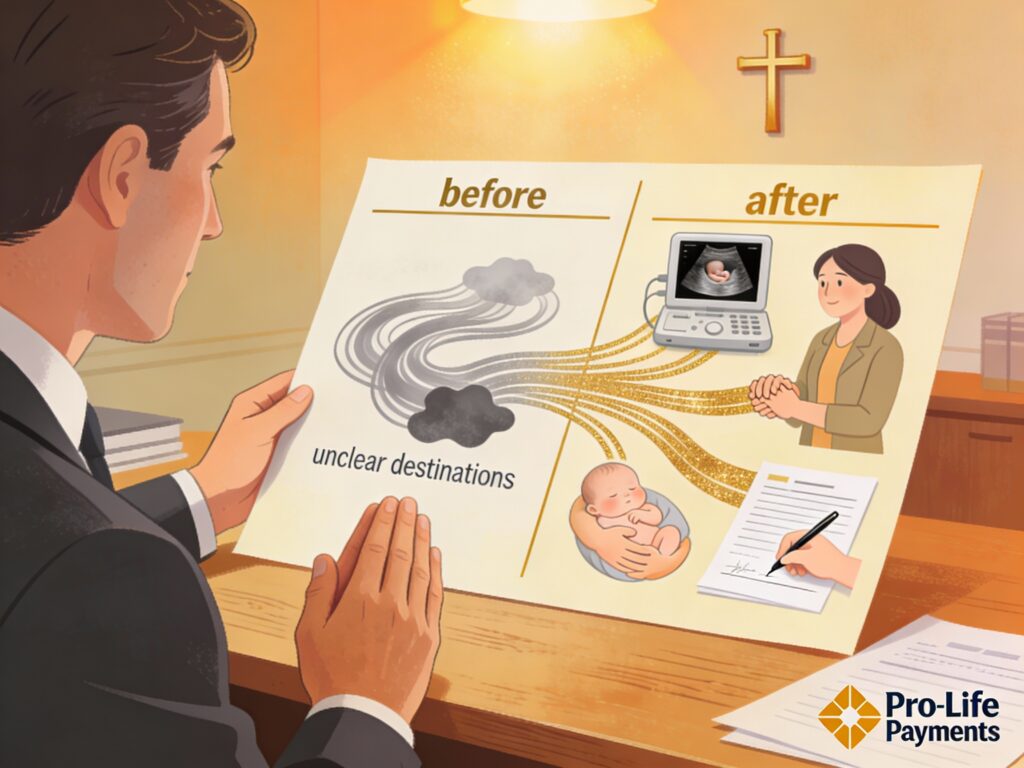
The Payment Processing Problem: How to Screen Investments for Pro-Life Values Among Neutral, Hostile, or Supportive Providers
Payment processing represents the highest-leverage opportunity for Christian businesses to screen investments for pro-life values. Every business must process payments; the only question is whether those processing fees fund organizations that celebrate abortion or organizations that defend life. Understanding the landscape of processor values allows business owners to categorize vendors as hostile, neutral, or supportive—and make informed decisions accordingly.
Hostile payment processors actively fund abortion advocacy and oppose biblical values through corporate giving, employee benefits, political lobbying, and public statements. Major payment brands including PayPal, Stripe, Square, and Blackbaud have documented histories of supporting Planned Parenthood and abortion rights organizations.
PayPal, the owner of Venmo, serves as the “private sector lead for the U.N. Women’s Generation Equality Forum’s Economic Justice and Rights Action Coalition,” which explicitly supports ensuring 50 million more women can access “safe and legal abortion” by 2026. Blackbaud.com supports the United Nations Universal Declaration of Human Rights and UN Global Compact, frameworks that identify abortion access as a human right. Block, the owner of Square and CashApp, explicitly states in its 2022 Corporate Social Responsibility Report that the company covers “comprehensive reproductive health services, including voluntary and involuntary abortion services.”
Beyond corporate giving, hostile processors pose an existential threat through ideological deplatforming—the sudden cancellation of payment processing accounts for organizations expressing pro-life, pro-marriage, or conservative viewpoints. Stripe canceled the American Family Association and the free-speech platform Gab.com, demonstrating that dependence on ideologically opposed financial infrastructure creates vulnerability. Christian organizations risk sudden loss of payment processing capabilities—a death sentence for any business or ministry dependent on online transactions.
Neutral payment processors do not actively promote abortion but make no commitment to supporting pro-life causes. These vendors treat payment processing as a purely commercial transaction, maintaining public silence on moral and political issues. While neutral processors avoid direct opposition to Christian values, they offer no strategic advantage for businesses seeking to advance the pro-life mission. Fees paid to neutral vendors represent missed opportunities—dollars that could fund pregnancy resource centers instead flow to corporations whose only commitment is shareholder profit.
Supportive payment processors actively fund pro-life organizations and design their business models to transform routine transactions into mission-advancing activities. Pro-Life Payments exemplifies the supportive category, donating 15% of gross revenue to organizations that protect the unborn and support mothers in crisis. When Christian businesses process through supportive vendors, every customer swipe becomes an automatic donation to the pro-life movement—turning mandatory fees into strategic investments.
The contrast in net pro-life impact is dramatic. A Christian coffee shop processing $20,000 monthly through Square generates approximately $600 in monthly fees, or $7,200 annually. Those fees support Block’s corporate commitment to funding “voluntary and involuntary abortion services.” The same coffee shop processing through Pro-Life Payments generates approximately $3,600 in net annual fees, of which $540 flows directly to pro-life organizations—year after year, automatically, without additional effort. Over a decade, the swing between hostile and supportive processors totals $77,400 in net pro-life impact—equivalent to funding thousands of ultrasounds, counseling sessions, and material support packages for mothers choosing life.
To screen investments for pro-life values in payment processing requires identifying current providers, researching their corporate values and giving patterns, calculating the net pro-life impact of switching, and making the operational transition to supportive vendors. The defensive benefits—protection from ideological deplatforming—and offensive benefits—perpetual pro-life funding—make payment processing the single highest-leverage investment decision available to Christian businesses.
Must See Also: The Best Christian and Pro-Life Investments to Consider in Today’s Market
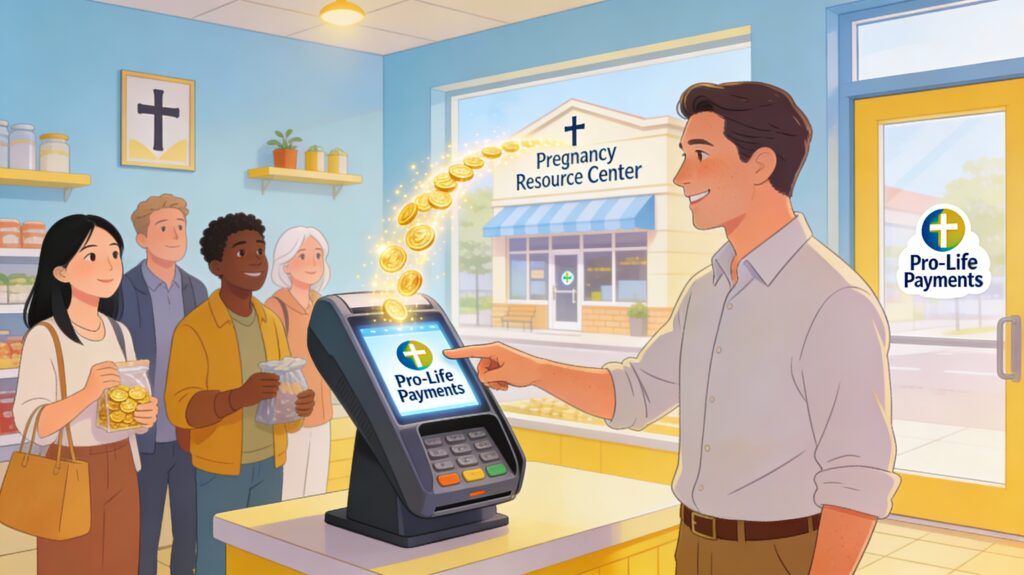
Building Your Vendor Screening Checklist to Screen Investments for Pro-Life Values
Effective vendor screening requires a systematic framework that evaluates companies across multiple dimensions of values alignment. Christian business owners who screen investments for pro-life values need practical criteria that distinguish between vendors advancing the culture of life, those funding the culture of death, and those maintaining neutral positions. The following checklist provides that framework.
Corporate values statements and mission declarations represent the first screening criterion. Public companies increasingly publish diversity, equity, and inclusion (DEI) statements, corporate social responsibility (CSR) reports, and environmental, social, and governance (ESG) disclosures that reveal ideological commitments. Organizations promoting DEI typically emphasize support for LGBTQ+ causes, reproductive rights, and progressive political movements—euphemisms that often translate to abortion advocacy and gender ideology.
When researching potential vendors, examine their “About Us,” “Our Values,” and “Social Impact” pages for language including “reproductive healthcare,” “reproductive justice,” “gender-affirming care,” “LGBTQIA+ support,” or references to UN Sustainable Development Goals and Women’s Empowerment Principles. These phrases serve as red flags indicating ideological opposition to biblical values. Conversely, vendors explicitly identifying as Christian, faith-based, or pro-life signal alignment with kingdom principles.
Political contributions and lobbying activity provide objective data on corporate priorities. Federal Election Commission filings, corporate PAC donations, and lobbying expenditures reveal where companies deploy political resources. Research vendors using OpenSecrets.org, which tracks corporate PAC contributions, individual donations from executives, and lobbying spending. Businesses consistently funding pro-abortion lawmakers or advocacy groups demonstrate hostile values; those funding pro-life candidates and organizations signal support.
Microsoft’s corporate PAC gave over $233,000 to 119 lawmakers who voted against the Women’s Health Protection Act while simultaneously pledging to cover employee abortion travel expenses—illustrating that corporate political spending reveals true priorities beneath public relations messaging. Christian businesses screening investments for pro-life values must look beyond marketing claims to examine where companies actually direct political resources.
Employee benefits and HR policies expose corporate values through practical implementation. Vendors offering abortion travel benefits, gender transition coverage, or partnership benefits for same-sex relationships demonstrate ideological commitments contradicting biblical anthropology and sexual ethics. Review vendor annual reports, corporate social responsibility disclosures, and employee benefit summaries for references to “comprehensive reproductive health,” “fertility benefits” (often including IVF and abortion), “gender-affirming healthcare,” or “inclusive family planning.”
Negative screening—excluding companies involved in abortion, LGBTQ+ advocacy, or other activities contradicting Christian values—represents the baseline approach for biblically responsible investing. Positive screening—proactively selecting vendors with strong pro-life commitments and Christian values—elevates the strategy from defensive (avoiding harm) to offensive (actively advancing the pro-life mission).
Industry affiliations and partnership networks reveal values through association. Vendors participating in corporate coalitions supporting abortion rights, signing letters opposing pro-life legislation, or partnering with organizations like Planned Parenthood signal hostile values. Businesses affiliated with faith-based industry groups, Christian business networks, or pro-life advocacy coalitions demonstrate alignment.
Public statements on controversial issues provide qualitative evidence of corporate values. When social controversies arise—Supreme Court decisions on abortion, state legislation restricting gender procedures for minors, or cultural debates over marriage and sexuality—corporate responses reveal priorities. Vendors issuing statements supporting abortion access, opposing pro-life legislation, or celebrating Pride Month demonstrate progressive ideological commitments. Vendors maintaining professional neutrality or explicitly supporting biblical values signal potential alignment.
Customer base and target market offer indirect values indicators. Vendors serving primarily Christian organizations, churches, ministries, and faith-based nonprofits typically align their offerings with those customers’ values. Platforms marketing to progressive nonprofits, LGBTQ+ advocacy groups, or abortion providers signal ideological opposition. Examining the testimonials, case studies, and client lists published by vendors reveals which communities they serve and therefore which values they prioritize.
Compliance and regulatory positions on contentious issues demonstrate operational values. Vendors supporting government mandates requiring abortion coverage, opposing religious liberty exemptions, or advocating for policies penalizing faith-based hiring practices reveal hostility toward Christian organizations. Vendors defending religious freedom, supporting conscience protections, and opposing coercive mandates signal alignment.
This vendor screening checklist transforms the process of evaluating business relationships from intuition-based guesswork to evidence-based analysis. Christian businesses that systematically apply these criteria when selecting processors, banks, software vendors, suppliers, and service providers ensure that operational spending advances rather than undermines the pro-life mission.
Must See Also: Christian Merchant Services: Pro-Life Payments Company Profile
Red Flags to Watch When You Screen Investments for Pro-Life Values
Identifying hostile vendors requires recognizing warning signs that signal corporate opposition to biblical values. Christian business owners who screen investments for pro-life values must develop pattern recognition for the language, affiliations, and behaviors that reveal ideological commitments contradicting the sanctity of life. The following red flags serve as early warning indicators.
Diversity, Equity, and Inclusion (DEI) language represents the most reliable red flag. Corporate DEI statements, while ostensibly promoting workplace fairness, consistently correlate with support for abortion rights, LGBTQ+ advocacy, and progressive political causes. Companies emphasizing “inclusive reproductive healthcare,” “comprehensive family planning,” or “gender diversity” typically fund organizations and policies opposing biblical values.
When vendor websites feature dedicated DEI pages, Pride Month celebrations, or commitments to “reproductive justice,” these signals indicate ideological frameworks incompatible with pro-life convictions. Research demonstrates that companies taking public stances on abortion and LGBTQ+ issues do so based on internal ideological alignment between management and employees—meaning DEI language reflects authentic corporate values, not merely public relations posturing.
United Nations affiliations signal ideological alignment with international frameworks promoting abortion access. Companies supporting UN Sustainable Development Goals, UN Women’s Empowerment Principles, UN Global Compact, or UN Universal Declaration of Human Rights implicitly endorse frameworks identifying abortion as a human right and reproductive autonomy as essential to gender equality. Blackbaud.com explicitly states support for these UN frameworks, demonstrating how UN affiliation translates to pro-abortion advocacy.
Abortion travel benefit policies provide unambiguous evidence of corporate values. Following the Supreme Court’s Dobbs decision overturning Roe v. Wade, dozens of major corporations announced policies covering employee travel expenses for out-of-state abortions. Companies including Microsoft, Meta, JP Morgan Chase, Wells Fargo, Disney, and Amazon publicly committed to these benefits, signaling that corporate HR policies actively facilitate abortion access.
When screening vendors, research whether they offer abortion travel benefits by reviewing corporate announcements, annual reports, employee benefit summaries, and news coverage following major Supreme Court decisions. Vendors advertising these policies as recruitment tools or corporate values demonstrate that abortion advocacy extends beyond passive neutrality into active promotion.
Corporate letter-signing campaigns reveal ideological commitments through collective action. Businesses frequently band together to sign open letters opposing pro-life legislation, supporting abortion rights, or advocating for LGBTQ+ policies. These coordinated campaigns—often organized by advocacy groups and amplified through media coverage—demonstrate that companies view political activism as legitimate corporate activity.
Research whether potential vendors signed letters opposing state pro-life laws, supporting federal abortion protection legislation, or advocating against parental rights bills. Companies participating in these campaigns self-identify as ideologically opposed to biblical values, providing clear screening signals.
“Social risk” account termination language represents one of the most dangerous red flags. Processors increasingly justify canceling accounts for “social risk,” “reputational risk,” or “values misalignment”—euphemisms for ideological deplatforming. Terms of service including broad discretion to terminate accounts based on subjective risk assessments create vulnerability for Christian organizations whose biblical positions on marriage, sexuality, and life may trigger cancellation.
When evaluating payment processors, review terms of service for language granting unilateral termination rights based on “social risk,” “brand safety,” “community standards,” or “acceptable use policies.” Processors reserving these rights demonstrate willingness to weaponize financial infrastructure against ideological opponents—a threat Christian businesses cannot ignore.
Partnership with abortion providers offers direct evidence of hostile values. Vendors providing services to Planned Parenthood, abortion advocacy groups, or telemedicine abortion platforms signal that facilitating abortion access constitutes acceptable business. Payment platforms enabling medication abortion providers demonstrate through client relationships that abortion advocacy aligns with corporate values.
ESG investment ratings and certifications paradoxically serve as red flags despite appearing socially conscious. ESG screening typically emphasizes environmental sustainability, workplace diversity, and governance transparency but rarely includes pro-life criteria. Companies promoting high ESG scores or ESG fund inclusion often simultaneously support abortion access as part of “comprehensive reproductive healthcare” frameworks. Christian businesses must recognize that ESG excellence frequently correlates with biblical values opposition.
Corporate activism on state legislation reveals operational priorities. When companies threaten to boycott states passing pro-life laws, oppose parental rights legislation, or lobby against religious freedom protections, they demonstrate that progressive political goals outweigh commercial neutrality. Disney’s opposition to Florida’s Parental Rights in Education Act and threats by corporations to leave states restricting abortion exemplify this pattern.
These red flags function as early warning systems, enabling Christian business owners to identify hostile vendors before establishing financial relationships. Systematic screening using these criteria protects businesses from inadvertently funding abortion advocacy while positioning them to redirect cash flow toward supportive alternatives.
Must See Also: Ensuring Security and Trust with Conservative Payment Processing
Critical Questions to Ask When You Screen Investments for Pro-Life Values
Due diligence requires asking direct questions that expose vendor values before committing to financial relationships. Christian business owners who screen investments for pro-life values must develop investigative frameworks that move beyond marketing materials to uncover operational realities. The following questions provide that framework.
Does your company have a published diversity, equity, and inclusion policy? If so, what specific commitments does it include regarding reproductive healthcare, gender identity, and LGBTQ+ support? This opening question establishes whether vendors maintain ideological frameworks contradicting biblical values. Companies with comprehensive DEI policies typically integrate abortion advocacy and gender ideology into corporate culture. Request copies of DEI statements, employee handbooks, and benefit summaries to evaluate specific commitments.
What employee benefits does your company offer related to reproductive healthcare, family planning, and gender-affirming care? This question exposes operational values through HR policies. Vendors offering abortion travel benefits, coverage for elective abortion, IVF without ethical restrictions, or gender transition procedures demonstrate that facilitating these activities aligns with corporate values. Benefits documentation provides objective evidence of priorities.
Has your company signed corporate letters or joined coalitions supporting abortion access, opposing pro-life legislation, or advocating for LGBTQ+ policies? This question reveals political activism. Companies participating in coordinated campaigns self-identify as ideologically opposed to biblical values. Request disclosure of letter-signing activity, trade association memberships, and advocacy coalition participation.
What organizations does your company support through corporate philanthropy, matching gift programs, or sponsorships? This question exposes values through charitable giving. Vendors allowing employee matching gifts to Planned Parenthood, sponsoring abortion rights advocacy groups, or funding LGBTQ+ organizations demonstrate ideological commitments. Corporate social responsibility reports and foundation disclosures document giving patterns.
Does your company maintain policies allowing account termination based on customer values, political positions, or advocacy for controversial issues? This question addresses deplatforming risk. Processors reserving rights to cancel accounts for “social risk” or “reputational concerns” create existential vulnerability for Christian organizations. Request terms of service, acceptable use policies, and case examples of account terminations to evaluate risk.
What percentage of your corporate revenue or profits supports pro-life organizations, Christian ministries, or faith-based causes? This question identifies supportive vendors. Companies like Pro-Life Payments that donate fixed percentages of revenue to pro-life causes demonstrate authentic alignment. Contrast vendors making no charitable commitments or supporting exclusively progressive causes.
Can you provide references from other Christian organizations, churches, or pro-life nonprofits currently using your services? This question validates claims through peer experience. Vendors serving primarily faith-based clients demonstrate track records supporting Christian values. Request contact information for reference checks with similar organizations.
How does your company respond when employees or advocacy groups pressure you to deny service to Christian organizations, pro-life groups, or conservative causes? This question exposes operational priorities during ideological conflict. Vendors committed to neutrality or Christian values will articulate policies protecting customer relationships regardless of external pressure. Vendors unable or unwilling to provide clear answers signal potential vulnerability to activist demands.
Does your company support UN Sustainable Development Goals, UN Women’s Empowerment Principles, or other international frameworks addressing reproductive rights? This question identifies ideological alignment with organizations promoting abortion as a human right. Vendors endorsing these frameworks implicitly support abortion advocacy.
What is your company’s policy on providing services to abortion providers, Planned Parenthood affiliates, or reproductive rights advocacy groups? This question reveals values through client relationships. Vendors unwilling to serve abortion providers demonstrate boundaries aligned with pro-life convictions. Vendors serving abortion industry participants signal that facilitating abortion access constitutes acceptable business.
These questions transform vendor evaluation from passive research to active investigation. Christian businesses willing to ask direct questions, request documentation, and demand transparent answers demonstrate that values alignment matters more than convenience or cost savings. Vendors responsive to these inquiries and providing satisfactory answers deserve consideration. Vendors deflecting questions, refusing documentation, or offering vague assurances signal that values alignment ranks low among corporate priorities.
Must See Also: Pro-Life Fintech: Pro-Life Payments
Pro-Life Payments as the Benchmark When You Screen Investments for Pro-Life Values
Christian businesses seeking positive examples of what values-aligned vendors look like should examine Pro-Life Payments as the benchmark standard for how payment processors can actively invest in the pro-life movement with every transaction processed. The company’s business model, charitable commitments, and operational priorities demonstrate what supportive—rather than merely neutral or hostile—financial relationships produce.
Pro-Life Payments is a values-driven Christian merchant services company founded in 2021 and headquartered in Mt. Pleasant, South Carolina. The company specializes in providing credit card processing and banking solutions for Christian organizations, businesses, and nonprofits that want to ensure financial transactions align with biblical principles. Unlike mainstream processors that funnel fees toward abortion advocacy or maintain commercial neutrality, Pro-Life Payments transforms routine payment processing into mission-advancing activity.
The charitable commitment distinguishing Pro-Life Payments involves donating 15% of gross revenue to organizations protecting the unborn. This commitment, inspired by biblical principles including Exodus 23:19 (“You shall bring the choice first fruits of your soil into the house of the Lord your God”), ensures that a significant portion of every processing fee funds pregnancy resource centers, adoption agencies, and life-affirming ministries. The first-fruits principle—giving from the beginning of economic activity rather than surplus at the end—creates perpetual funding streams independent of donor cultivation or annual appeals.
The financial mechanics demonstrate how operational pro-life investing delivers superior impact compared to portfolio strategies. When Christian businesses process payments through Pro-Life Payments, the company retains approximately 1% of gross transaction volume as net processing fees. Pro-Life Payments then donates 15% of that revenue—not 15% of profits, but 15% of gross revenue—to pro-life organizations. A business processing $100,000 annually generates approximately $1,000 in net fees, of which $150 flows to pro-life causes each year. Over a decade, that cumulative impact totals $1,500 in pro-life funding from a single operational decision requiring no additional capital outlay.
The services offered by Pro-Life Payments match or exceed secular processors, eliminating the false choice between values alignment and competitive functionality. The company provides e-commerce and omni-channel payment processing, retail and restaurant point-of-sale systems, mobile card readers and ACH payments, donation management tools for churches and nonprofits, free equipment and POS rentals, month-to-month contracts with no early termination fees, and fast funding with next-day or same-day deposits. These capabilities ensure Christian businesses sacrifice neither service quality nor cost efficiency when prioritizing values.
The defensive value proposition addresses ideological deplatforming risk. Pro-Life Payments was designed explicitly to protect Christian businesses from account cancellations based on biblical values. While secular processors increasingly invoke “social risk” justifications to terminate accounts for organizations expressing pro-life views, Pro-Life Payments guarantees that businesses will never face cancellation for opposing abortion, affirming traditional marriage, or teaching biblical sexuality. This creates what might be termed “values insurance”—operational stability regardless of cultural or political shifts.
The community-building dimension extends beyond transactional relationships. Pro-Life Payments serves Pro-Lifers, Catholics, Evangelicals, Jews, Muslims, and individuals who support life, fostering a sense of belonging among faith-driven organizations through shared values and initiatives. The platform enables businesses to publicly demonstrate values alignment, strengthening brand identity among customers who prioritize supporting Christian enterprises.
The transparency and accountability distinguishing Pro-Life Payments from mainstream alternatives includes public disclosure of charitable commitments, documented partnerships with pro-life organizations, and accessible tools like the Baby Saving Calculator enabling businesses to quantify their pro-life impact. This transparency builds trust and enables customers to verify that marketing claims translate to operational reality.
When Christian business owners screen investments for pro-life values, Pro-Life Payments exemplifies the benchmark standard: a vendor whose business model actively advances the culture of life, whose operational priorities protect Christian organizations from ideological deplatforming, and whose financial structure transforms unavoidable processing fees into strategic pro-life investments. Businesses evaluating other vendors should measure them against this standard, asking whether alternatives offer comparable mission alignment, charitable impact, and values protection.
Must See Also: How Everyday People Can Join the Fight Against Abortion
Calculating Your Pro-Life Investment Impact When You Screen Investments for Pro-Life Values
Quantifying the financial and mission impact of vendor decisions transforms abstract values alignment into concrete metrics Christian business owners can measure, report, and optimize. When businesses screen investments for pro-life values and transition from hostile or neutral vendors to supportive alternatives like Pro-Life Payments, the resulting pro-life funding follows predictable mathematical formulas enabling strategic planning.
The baseline calculation for payment processing impact begins with annual transaction volume. Businesses should document total credit card, debit card, and ACH transactions processed across all channels—e-commerce, point-of-sale, mobile, and donation platforms. This gross transaction volume becomes the foundation for calculating net processing fees and resulting pro-life donations.
Pro-Life Payments retains approximately 1% of gross transaction volume as net processing fees after paying card network costs, interchange fees, and operational expenses. The company then donates 15% of that gross revenue to pro-life organizations. The formula:
Annual Pro-Life Funding = (Annual Transaction Volume × 0.01) × 0.15
A Christian bookstore processing $500,000 annually generates:
-
Net Processing Fees: $500,000 × 0.01 = $5,000
-
Annual Pro-Life Donation: $5,000 × 0.15 = $750
Over ten years, that cumulative impact totals $7,500 in pro-life funding—equivalent to:
-
Approximately 50 ultrasounds at $150 each
-
Approximately 125 counseling sessions at $60 each
-
Approximately 15 months of material support packages at $500 per month
The comparison calculation quantifies the swing from hostile to supportive processors. Businesses currently using mainstream processors should research corporate giving patterns to estimate abortion funding attributable to their fees. While exact percentages vary, major processors including PayPal, Square, and Stripe donate millions annually to organizations supporting abortion access through direct corporate giving, employee matching programs, and political advocacy.
Conservative estimates suggest 5–10% of fees paid to hostile processors ultimately fund abortion-supporting organizations through direct and indirect channels. Using the Christian bookstore example:
Hostile Processor Scenario:
-
Annual fees to hostile processor: $10,000 (typical 2% effective rate)
-
Estimated abortion funding: $500–$1,000 annually (5–10%)
-
Ten-year abortion funding: $5,000–$10,000
Supportive Processor Scenario:
-
Annual fees to Pro-Life Payments: $5,000 (1% net rate)
-
Pro-life funding: $750 annually
-
Ten-year pro-life funding: $7,500
Net Pro-Life Impact Swing:
-
Avoided abortion funding: $5,000–$10,000
-
Generated pro-life funding: $7,500
-
Total Impact: $12,500–$17,500 shift from culture of death to culture of life
The scale calculation demonstrates how growth compounds pro-life impact. As businesses expand and transaction volumes increase, pro-life funding grows proportionally without requiring additional operational decisions or charitable appeals. A business processing $500,000 annually that grows 10% per year reaches approximately $1.3 million in annual volume by year ten, generating cumulative pro-life funding exceeding $11,000 over that decade.
The employee engagement calculation measures team satisfaction and retention benefits from values-aligned operations. Research indicates 84% of Americans willing to change consumption habits to support brands with good causes, suggesting employees similarly value working for businesses whose operations align with personal convictions. Reduced turnover saves recruitment and training costs while strengthening institutional knowledge—financial benefits complementing pro-life mission impact.
The customer loyalty calculation quantifies revenue benefits from publicly demonstrating pro-life commitments. Businesses transparently communicating that “every transaction supports pregnancy resource centers through our partnership with Pro-Life Payments” strengthen brand differentiation among values-aligned customers. These customers exhibit higher lifetime value, lower price sensitivity, and stronger word-of-mouth referral patterns than transactional customers attracted solely by price or convenience.
The marketing content calculation measures value derived from authentic mission stories. Businesses processing through Pro-Life Payments gain compelling narratives for content marketing, social media, and brand storytelling—authentic examples of how operational decisions translate to babies saved and mothers supported. This content performs better than generic advertising because it demonstrates genuine values rather than performative marketing.
Christian business owners should document these calculations in annual Kingdom Impact Reports shared with stakeholders, employees, and customers. Transparent reporting reinforces that pro-life commitments reflect authentic operational priorities while providing accountability mechanisms ensuring words translate to measurable action.
Must See Also: 10 Pro-Life Business Investment Ideas That Support Life and Strengthen Your Returns
Implementing Your Pro-Life Values Screening System: Practical Next Steps
Knowledge without action produces neither mission impact nor kingdom advancement. Christian business owners who understand how to screen investments for pro-life values must now implement systematic changes redirecting cash flow from hostile and neutral vendors to supportive alternatives. The following implementation framework transforms research into operational reality.
Step One: Conduct a comprehensive financial relationship audit. Document every vendor, service provider, financial institution, and platform receiving business funds. Create a spreadsheet listing payment processors, banks, software subscriptions, insurance providers, office suppliers, professional service firms, and marketing platforms. For each vendor, record annual spending, contract terms, and current satisfaction levels. This audit creates the baseline inventory for subsequent screening.
Step Two: Prioritize relationships by financial impact and implementation complexity. Not all vendor transitions offer equal leverage. Payment processing typically represents the highest-impact, lowest-complexity change—a single operational decision generating perpetual pro-life funding with minimal disruption. Banking relationships, while significant, involve greater switching costs and timeline requirements. Software subscriptions and service contracts fall somewhere between. Rank vendor relationships using a matrix evaluating pro-life impact potential against implementation difficulty.
Step Three: Research vendor values using the screening checklist. Systematically investigate each vendor using the criteria, questions, and red flags outlined in previous sections. Document findings in the vendor spreadsheet, categorizing each as hostile, neutral, or supportive based on evidence. Prioritize researching high-impact vendors first—payment processors, banks, and major service contracts—before investigating lower-spend relationships.
Step Four: Identify values-aligned alternatives for hostile and neutral vendors. For each vendor categorized as hostile or neutral, research Christian, pro-life, or values-aligned alternatives offering comparable services. Pro-Life Payments represents the payment processing alternative; other faith-based vendors serve various industries. Compile alternatives list with contact information, service offerings, and pricing structures.
Step Five: Execute the payment processing transition first. Switching to Pro-Life Payments delivers immediate pro-life impact while building momentum for subsequent changes. Contact Pro-Life Payments, complete the application process, coordinate equipment installation or software integration, conduct parallel testing to verify functionality, communicate the change to customers and stakeholders, and discontinue the previous processor once the transition proves successful. The entire process typically completes within 2–4 weeks.
Step Six: Communicate values alignment transparently. Once operational changes occur, leverage them for mission communication. Update website copy explaining the Pro-Life Payments partnership, create social media content celebrating the switch and quantifying pro-life impact, include values alignment messaging in email signatures and customer receipts, develop case studies and blog posts documenting the transition process, and incorporate pro-life investment language into marketing materials and brand messaging. Transparent communication demonstrates authentic values while strengthening customer loyalty.
Step Seven: Establish annual review processes. Pro-life business investment represents ongoing stewardship rather than one-time decisions. Schedule annual strategic reviews examining new vendor relationships, evaluating whether existing vendors maintain values alignment, identifying additional opportunities for pro-life investment, calculating cumulative mission impact using the formulas provided, and reporting results to stakeholders through Kingdom Impact Reports. Annual reviews ensure businesses continuously optimize pro-life impact as operations evolve.
Step Eight: Mentor other Christian business owners. Christian entrepreneurs who successfully implement pro-life investment strategies should share lessons learned with peers. Host workshops for local business networks, write case studies documenting the transition process and results, participate in industry conferences promoting values-aligned vendors, and create accountability groups supporting fellow Christian owners pursuing similar changes. Mentorship multiplies impact by expanding the ecosystem of businesses funding the pro-life movement.
The thesis remains straightforward: To screen investments for pro-life values, Christian businesses must trace every financial relationship and intentionally choose those that actively invest in the pro-life movement instead of undermining it. Implementation transforms that thesis from theoretical conviction to operational reality—redirecting tens of thousands of dollars per business, millions across the Christian business community, from abortion-supporting institutions to pregnancy resource centers saving lives and supporting mothers choosing life.
Must See Also: Christian Merchant Processing
Conclusion: The Moral Imperative to Screen Investments for Pro-Life Values
Every financial transaction tells a story. It either whispers, “Abortion is normal; we will do business with those who profit from it,” or it declares, “Life is sacred; even our fees will serve the cause of protecting children and loving their mothers.” For Christian business owners operating in an age when major financial institutions actively fund the culture of death, there is no such thing as a purely neutral transaction.
The evidence is overwhelming. PayPal supports removing legal barriers to ensure 50 million more women can access abortion by 2026. Bank of America, JP Morgan Chase, and Wells Fargo offer abortion travel benefits. Block’s Square and CashApp cover voluntary abortions. Mainstream processors cancel accounts for Christian organizations expressing biblical values. These realities demand response.
Christian business owners possess extraordinary power to redirect financial infrastructure away from abortion advocacy and toward life-affirming work. When a business processing $500,000 annually switches from a hostile processor to Pro-Life Payments, the resulting ten-year impact swings $12,500–$17,500 from funding abortion access to funding pregnancy resource centers—a margin equivalent to hundreds of ultrasounds, thousands of counseling sessions, and years of material support for mothers choosing life.
The tools, questions, and red flags documented in this article eliminate excuses. Vendor screening checklists identify hostile, neutral, and supportive providers. Direct questions expose corporate values beneath marketing claims. Red flags warn of ideological threats. Impact calculations quantify mission results. Implementation frameworks transform knowledge into action. Every resource necessary for Christian businesses to screen investments for pro-life values now exists.
The remaining question is not whether pro-life alternatives exist—they do. The question is not whether screening makes financial sense—it delivers both mission impact and commercial benefits through employee engagement, customer loyalty, and operational stability. The question is whether Christian business owners will prioritize conviction over convenience and make the operational changes required to align every dollar with kingdom values.
Scripture teaches that faith without works is dead (James 2:17), that to whom much is given much is required (Luke 12:48), and that believers will give account for every resource entrusted to their stewardship (Matthew 25:14–30). Christian business owners controlling hundreds of thousands or millions of dollars in annual cash flow bear responsibility for ensuring those resources advance rather than undermine the cause of life.
Pro-Life Payments stands ready as the benchmark alternative, offering competitive rates, comprehensive services, ideological protection, and perpetual pro-life funding. The transition requires a single decision, minimal operational disruption, and zero additional capital. The result is transformation of mandatory processing fees into strategic investments that save babies, support mothers, and build a culture of life—one transaction at a time.
The thesis bears repeating: To screen investments for pro-life values, Christian businesses must trace every financial relationship—from banks to processors like Pro-Life Payments—and intentionally choose those that actively invest in the pro-life movement instead of undermining it. Knowledge is complete. Tools are available. Alternatives exist. The only remaining requirement is decision and action. Will Christian business owners steward their financial relationships with the same intentionality they apply to investment portfolios? Will they recognize that for most businesses, the largest pro-life investment opportunity is not what they own but what they pay?
The unborn cannot speak for themselves. But Christian businesses can speak through their operational choices—and payment processing represents one of the clearest, most powerful voices available. The time for merely agreeing with pro-life principles has passed. The time for screening investments, redirecting cash flow, and transforming business operations into funding engines for the culture of life has arrived.
Must See Also: The Challenges of Pro-Life Nonprofit Organizations