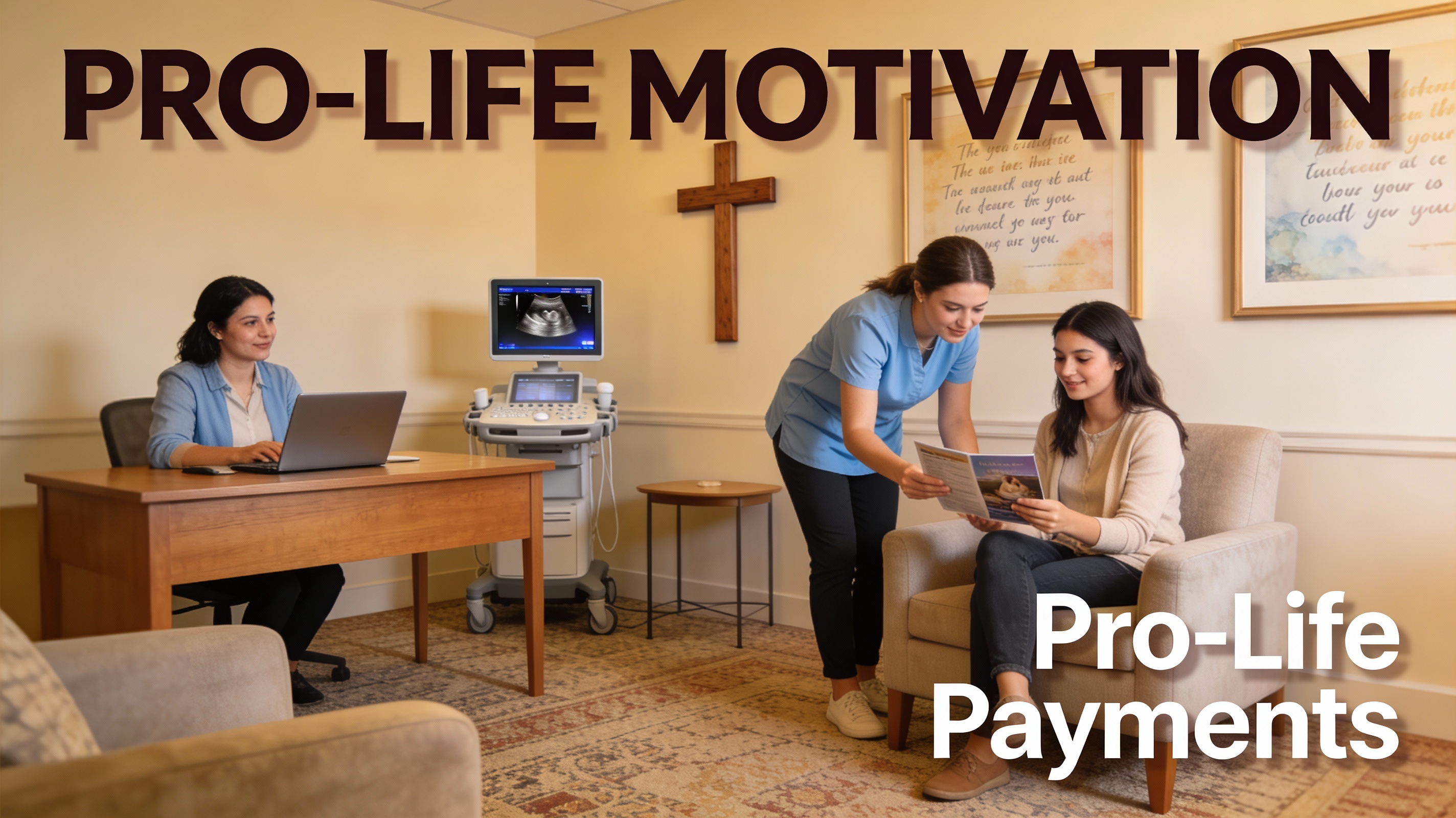
Pro-life believers demonstrate an unwavering, single-minded dedication to protecting the unborn that transcends convenience, comfort, and cultural opposition. This commitment manifests in countless ordinary Americans who sacrifice time, resources, and personal safety to defend life—from sidewalk counselors braving winter weather outside abortion facilities to pregnancy resource center volunteers offering hope at 2 a.m., from students risking social ostracism on college campuses to payment processing companies structuring their entire business model around saving babies. The pro-life movement represents one of America's most persistent and resilient grassroots forces, powered not by political calculation but by moral conviction that every human life possesses inherent dignity from conception to natural death.
The Relentless Dedication of Pro-Life Advocates
The March for Life 2026 drew tens of thousands of marchers who braved frigid January weather in Washington, D.C., to challenge abortion with the message "Life Is a Gift." This 53rd annual march continues a tradition that began in 1973, demonstrating the movement's remarkable persistence across five decades. March for Life President Jennie Bradley Lichter emphasized that today's march seeks to "impact laws at the state and federal level and to change American culture until abortion becomes unthinkable." The diverse crowd—young and old, women and men, people of various ethnicities and political affiliations—united around a singular mission: advocating for life from the moment of conception.
Lila Rose, who founded Live Action at age 15, exemplifies the movement's youthful leadership and total commitment. By age 22, Rose had already traveled throughout the United States, Ireland, Mexico, and Canada sharing her message. She told Liberty University students that over 3,500 lives are legally destroyed each day in America, adding: "Is there a human rights issue greater; is there an amount of bloodshed that is greater than in the lives lost to abortion? I will switch issues if somebody can find me a greater human rights abuse that our nation or our world faces." Rose began making pro-life educational presentations at churches at age 14, dedicating her entire adult life to ending abortion through undercover investigations that exposed sexual abuse cover-ups and racism within the abortion industry.
Sidewalk Advocates for Life has helped save 25,207 mothers and babies from abortion through their compassionate outreach at abortion facility sidewalks. The organization transforms what could be confrontational spaces into places of "real help and hope," training volunteers to offer life-affirming resources with loving, non-judgmental approaches. Over 60% of abortion workers who contacted And Then There Were None—Abby Johnson's ministry helping abortion workers leave the industry—received information from a Sidewalk Advocate, demonstrating the effectiveness of their patient, compassionate method. The organization's comprehensive training addresses virtually every situation volunteers may encounter, equipping ordinary people to become life-saving advocates without professional credentials or extensive experience.
Must See Also: Attracting Pro-Life Customers by Aligning Your Payment Processing with Your Values
Ordinary People Making Extraordinary Sacrifices
Pregnancy resource centers served families with material goods and services valued at $367 million in 2022, according to research by the Charlotte Lozier Institute and Care Net. These centers depend entirely on volunteers who donate countless hours providing free pregnancy testing, ultrasounds, counseling, education, and practical support. Senator Mike Lee and Representative Bob Good introduced a resolution recognizing pregnancy centers and their volunteers, with Good noting: "Pregnancy centers provide mothers a safe place to turn to as they look for help, hope, and healing during challenging times. These centers and the individuals who work and volunteer at them deserve to be supported and recognized for the vital role they play in helping mothers and their families."
The volunteers serving at pregnancy resource centers come from all walks of life—stay-at-home mothers, nurses, business professionals, retirees—united by their commitment to offering alternatives to abortion. One volunteer testimony described how a young woman named Addison, whose only support was her skeptical grandfather, came to the center. After seeing her ultrasound, Addison chose life for her baby despite her grandfather's initial opposition. The volunteer reflected on the transformative power of inviting even reluctant family members to ultrasound appointments, where the visual reality of the baby often changes hearts. These volunteers don't receive salaries or public recognition; they serve because they cannot remain passive while lives hang in the balance.
Lydia Taylor Davis, a pro-life social media influencer with 14,000 TikTok followers, dedicated her life to pro-life activism after a personal experience that crystallized her convictions. During a conversation with a pro-choice activist, Davis was told her foster sister should have been aborted. "I felt sick to my stomach in that moment and I froze," Davis recounted. "Because in that moment, I had to imagine a world without my sister—without her smile, without the joy she brings to this world." Since then, Davis has channeled that visceral reaction into full-time activism, running Students for Life's Instagram page and traveling to college campuses to engage students in dialogue about abortion. She described witnessing the moment Roe v. Wade was overturned: "Everyone burst into tears of joy as the television and media cameras surrounded us in that historic moment."
Must See Also: The Top 5 Reasons Christians Should Switch to Pro-Life Payments
The Personal Transformation of Pro-Life Converts
A former pro-choice advocate described her conversion to the pro-life position after joining campus ministry in college and interacting with pro-life students. "I had not imagined that pro-lifers could be anything but sanctimonious or overzealous. But these students were neither. They were practical and kind," she wrote. She discovered that pro-lifers are often feminists who view abortion as society's means of compelling women to behave more like men rather than addressing systemic barriers that make motherhood difficult. "I saw that the pro-lifers who don't make headlines, the ones on the ground—they serve Christ's mission in a way I only hoped I could. They demonstrate a true allegiance to all life, and, in their devotion to the vulnerable, serve as a model for how we can live in imitation of Christ today."
This conversion narrative highlights a crucial aspect of pro-life motivation: the recognition that protecting life requires comprehensive support, not merely opposition to abortion. The author realized her previous pro-choice position "neither as kind nor as thoughtful" as she believed, noting: "Pro-lifers showed me that my money could be spent not on death but on life, on helping the thousands of activists and volunteers who financially and emotionally support mothers." She concluded that "the true heart of the pro-life movement is not political but pastoral. In personal, individual ministry, pro-lifers have made their greatest accomplishments and their most persuasive arguments."
40 Days for Life demonstrates the power of sustained, peaceful prayer vigils outside abortion facilities. The organization coordinates focused, 40-day campaigns featuring round-the-clock prayer presences that have contributed to the closure of numerous abortion facilities nationwide. Participants stand witness 24 hours a day, sending what organizers describe as "a powerful message to the community about the tragic reality of abortion." These volunteers sacrifice sleep, comfort, and personal time to maintain continuous vigils, motivated by the conviction that prayerful presence saves lives. As one former abortion facility worker testified: "I am in this movement today because of ordinary people who took on an extraordinary task. My former abortion clinic is closed because of their sacrifice."
Must See Also: Pro-Life Donations
Students and Young Leaders Driving the Movement Forward
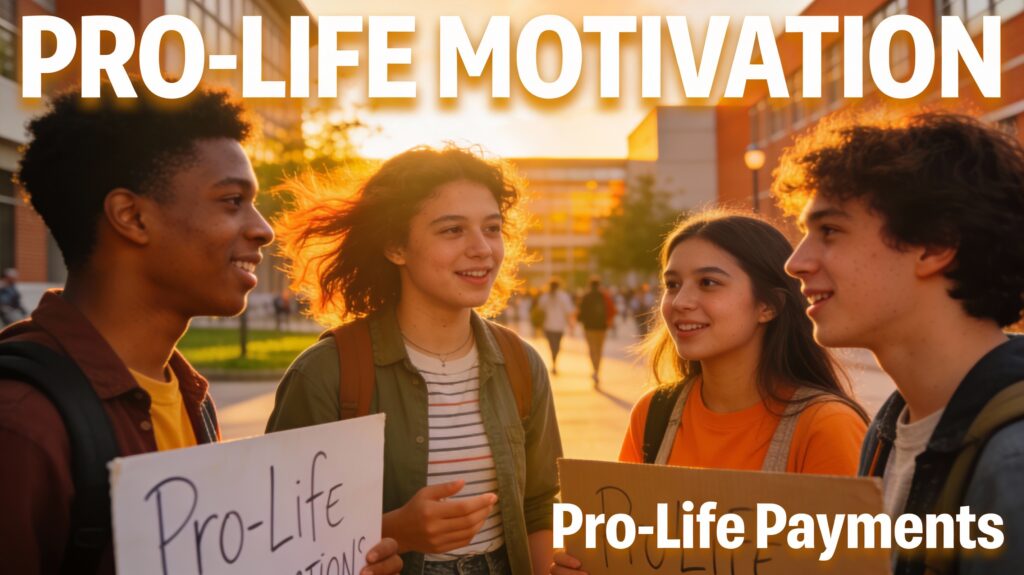
Students for Life of America has become one of the largest pro-life advocacy organizations in the country, reaching the "Pro-Life Generation" on college and high school campuses nationwide. The organization aims to reach one million potential voters between ages 18 and 35, recognizing that young people represent both the target demographic of the abortion industry and the movement's future leadership. The Atlantic noted that "Students for Life is becoming the new face of the anti-abortion movement," with a large staff and bigger budget than many other anti-abortion organizations. Students for Life President Kristan Hawkins emphasized the importance of equipping young people: "After training with SFLA and Sidewalk Advocates for Life, students are galvanized and empowered to show up and help rescue lives from abortion in their local communities."
Gavin Oxley, a University of Virginia student studying Medical Anthropology, became more actively engaged in the pro-life movement in response to what he describes as "probably the most pro-abortion administration we have ever had." Oxley observed: "I see a lot of people who are pro-life but are afraid to speak about it in school because of fear of being personally attacked for their beliefs." When he ran for Student Council president, he was targeted for being explicitly pro-life—but refused to apologize for his convictions. Oxley emphasizes kindness in pro-life advocacy: "You should never hide the truth, but also you shouldn't hurt other people. They need to know that others are here to help them. Don't be judgmental. Always see them as a person. Once people understand that you care about them, they are more likely to listen to you."
The youth-driven character of the pro-life movement ensures its continuation across generations. Young leaders like Rose, Davis, and Oxley represent a cohort that came of age after Roe v. Wade but before Dobbs, witnessing both the entrenched status of legal abortion and the possibility of overturning it. Their willingness to face social ostracism, academic discrimination, and professional consequences for their pro-life advocacy demonstrates motivation rooted in deep moral conviction rather than cultural conformity.
Must See Also: Core Christian Values: The Role of Pro-Life Payments in Promoting and Supporting Christian Family Values
Pro-Life Payments: Business Model as Pro-Life Witness
Pro-Life Payments represents a revolutionary approach to pro-life advocacy: structuring an entire business model around saving babies. Unlike occasional corporate philanthropy or token charitable donations, Pro-Life Payments commits to donating 15% of gross revenue—not net profits, but total revenue—to pro-life organizations that provide support, education, and resources to pregnant women. This extraordinary commitment means that every credit card transaction, every e-commerce purchase, every donation processed through the platform automatically generates substantial funding for pregnancy resource centers, maternity homes, and life-affirming organizations.
The mathematics reveal the power of this model. When businesses process payments through Pro-Life Payments, approximately 15% of every dollar in processing fees flows directly to pro-life causes. A Christian bookstore processing $50,000 monthly in sales through Pro-Life Payments would automatically contribute approximately $900 annually to pro-life ministries without any additional fundraising, appeals, or changes to customer pricing. A restaurant generating $100,000 monthly in credit card sales would generate roughly $1,800 annually for pro-life organizations simply by switching payment processors. This transforms a fixed cost of doing business—payment processing fees that merchants must pay regardless of provider—into a mission-driven investment that saves lives.
To understand the actual donation amount: Pro-Life Payments receives approximately 1% of gross revenue processed by their business customers as net credit card processing fees (the industry-standard merchant services fee). Pro-Life Payments then donates 15% of that 1% off the top—meaning they donate roughly 0.15% of the total transaction volume processed through their platform, or approximately 15% of their gross revenue as a company. For example, if a church processes $100,000 annually in donations through Pro-Life Payments, the payment processor receives approximately $1,000 in fees, and donates $150 of that revenue (15%) to pro-life causes. While this may seem modest per transaction, the aggregate impact across hundreds of businesses processing millions of dollars creates a substantial, continuous funding stream.
This model eliminates the instability inherent in traditional corporate giving, which fluctuates based on quarterly earnings, leadership changes, and marketing priorities. Pro-life organizations receiving support from Pro-Life Payments can count on steady, predictable funding that allows them to hire staff, maintain facilities, and plan long-term outreach. As more Christian businesses switch to Pro-Life Payments, the funding stream compounds—if 100 Christian businesses joined in 2024, their combined transactions might generate $150,000 annually for pro-life causes. If that number grows to 1,000 businesses, the annual contribution could reach $1.5 million. This creates exponential growth where every new business partner adds to a permanent, growing revenue base rather than resetting to zero each January.
Must See Also: Pro Life Fintech - Pro-Life Payments
Comprehensive Support Beyond Opposition
The pro-life movement's credibility rests not merely on opposing abortion but on providing comprehensive support for mothers and children. Human Coalition emphasizes this holistic approach: "By volunteering, you play a vital role in the fight for life. Your commitment and compassion will bring hope to the next mom seeking an abortion, and your donated time will shape the destiny of children in the womb." The organization provides case management, material assistance, housing support, and ongoing mentorship—addressing the root causes that make abortion seem necessary rather than simply condemning the choice.
Focus on the Family collaborates with pregnancy resource centers nationwide, recognizing that "the church is far more sophisticated and far better equipped to help young women... than in 1973." Jim Daly encouraged Christians to "get engaged with your local pregnancy resource center and volunteer, support them financially... there's like 3,000, 4,000 of these clinics around, probably right in your neighborhood." Amy Ford, founder of Embrace Grace, described pregnancy resource centers as "the first response team" and churches as "the hospital," creating a comprehensive network that addresses immediate crisis and long-term needs.
This comprehensive approach distinguishes the pro-life movement from mere political advocacy. Right to Life of Central California commits to "providing free educational resources to as many churches, youth groups, schools, and organizations as possible," recognizing that changing hearts requires education, not just legislation. The organization's outreach center serves as the hub for sidewalk advocacy ministries, where employees and volunteers "speak with young women and couples entering and leaving Planned Parenthood to offer alternatives to abortion as well as information about critical local resources." This patient, compassionate outreach reflects the movement's understanding that lasting cultural change requires person-by-person engagement rather than top-down mandates.
Must See Also: Empower Your Non-Profit with Pro-Life Payment Solutions
The Cost of Conviction in a Hostile Culture
Pro-life advocates face increasing hostility in contemporary America, from social media deplatforming to financial discrimination to physical attacks on pregnancy resource centers. Anti-abortion activists are freshly emboldened by political support in Washington, yet they simultaneously face unprecedented opposition. President Trump granted clemency to 23 activists convicted for obstructing access to abortion facilities, acknowledging the legal jeopardy pro-life advocates accept. Many volunteers at pregnancy resource centers have been followed, harassed, and even had authorities falsely informed they were suicidal, resulting in involuntary psychiatric holds—tactics designed to intimidate and silence pro-life voices.
Despite these obstacles, pro-life believers persist with remarkable resilience. Edgar Pacheco Jr., a Texas disability activist born without arms or legs due to the rare congenital condition tetra-amelia, offers a compelling witness to the value of every life. "Whatever your circumstances, whatever your situation, wherever God has placed you or you have placed yourself, if you are making an impact do not let anyone tell you otherwise," Pacheco encouraged pro-life supporters. "Because what society wants us to do is shut up. Shut up and not talk about the lives they are murdering, the babies they are killing—they want us to shut up and tell them yes, you are right, go ahead." Pacheco's parents resisted medical advice to abort him, and his subsequent advocacy resulted in passage of the Texas Edgar Pacheco Jr. Act in 2021, expanding support for children with disabilities in education.
This willingness to endure personal cost for principle demonstrates the depth of pro-life motivation. Volunteers don't receive compensation for standing in freezing weather outside abortion facilities. Students risk academic and social consequences for defending life on campus. Business owners face potential boycotts and payment processing discrimination for publicly supporting pro-life causes. Yet they persist because they recognize that approximately 2,500 to 3,500 unborn children lose their lives to abortion every single day in America—a scale of loss that demands response regardless of personal cost.
Must See Also: Payments Industry Values Incompatible with Christian, Pro-Life Values
Building a Sustainable Pro-Life Infrastructure
The pro-life movement increasingly recognizes that sustainable impact requires institutional infrastructure, not just individual heroism. Pro-Life Payments exemplifies this strategic thinking by creating financial systems that don't rely solely on donor generosity during crisis moments. When businesses adopt Pro-Life Payments for their merchant services, they become permanent stakeholders in the pro-life movement through their everyday operations. A church processing tithes, a pro-life ministry accepting donations, and a Christian retailer selling products all contribute to the same funding ecosystem automatically, without requiring annual appeals or capital campaigns.
This infrastructure extends beyond payment processing to include comprehensive support systems. Pro-Life Prosper, the nonprofit division of Pro-Life Payments, provides donation management software, customizable landing pages, and analytics tools that help organizations maximize their impact. The platform allows non-profits to create branded giving pages where donors can cover processing fees, ensuring 100% of their gift reaches the ministry. This attention to operational efficiency recognizes that pro-life organizations operate with limited resources and benefit from tools that reduce administrative burden while increasing fundraising effectiveness.
The movement's infrastructure also includes legal defense organizations protecting pro-life advocates from discrimination, educational initiatives training the next generation of leaders, and medical networks providing free ultrasounds and prenatal care. Inspire Investing offers biblically responsible investment portfolios that screen out abortion-supporting companies, allowing pro-life investors to ensure their retirement savings don't inadvertently fund Planned Parenthood or abortion travel benefits. This comprehensive ecosystem—spanning payment processing, investment management, legal defense, education, and direct service—creates resilience that can outlast political cycles, economic downturns, and cultural shifts.
Must See Also: Christian Merchant Processing
The Future of Pro-Life Advocacy
The overturning of Roe v. Wade in 2022 marked a watershed moment, shifting the pro-life movement's focus from federal litigation to state-level legislation and grassroots cultural transformation. March for Life President Jennie Bradley Lichter acknowledged this transition: "We applaud the many states that have stepped up to the plate and advanced laws to protect life. But there's still so much yet to do in transforming the culture to meet pregnant women with love and help when they need it most." This cultural transformation requires millions of individual conversations, acts of service, and demonstrations of compassionate support—precisely the work ordinary pro-life believers have been doing for decades.
The movement's young leadership ensures continuity and innovation. Students for Life of America, with its extensive campus network and digital organizing capabilities, represents the future of pro-life advocacy. Their ability to mobilize thousands of young activists demonstrates that pro-life conviction isn't confined to older, religiously conservative demographics but appeals to a generation that values authenticity, justice, and comprehensive support for vulnerable populations. These young leaders bring fresh communication strategies, technological sophistication, and unwillingness to compartmentalize their pro-life convictions from other justice issues.
Pro-Life Payments founder Jared Huffman's vision—turning customer financial transactions into pro-life funding—represents the kind of strategic innovation the movement needs. Rather than merely asking Christians to donate more, Huffman created a system where they redirect existing business expenses through values-aligned vendors, generating continuous pro-life funding without additional cost. This model could extend to other industries: pro-life insurance companies, mortgage providers, accounting firms, legal services, and healthcare networks. Each values-aligned vendor creates another revenue stream for life-affirming work while simultaneously reducing funding to corporations that support abortion access.
Must See Also: You Can't Unsee It—And You Can't Sleep Until You Act
Conclusion: Single-Minded Dedication to Life
Pro-life believers are indeed single-minded in their dedication to saving lives. This single-mindedness manifests in the college student who founded a national organization at age 15, the nurse who volunteers at a pregnancy resource center between shifts, the sidewalk counselor who stands in freezing weather offering alternatives, the business owner who restructures operations to support pro-life causes, and the payment processor that donates 15% of gross revenue to save babies. These individuals and organizations represent millions of Americans who refuse to accept abortion as an inevitable feature of modern society.
Their motivation transcends political calculation or cultural conformity. Pro-life advocates persist because they recognize the inherent dignity of every human life created in God's image. They serve because they cannot remain passive while thousands of lives are lost daily. They sacrifice because they believe future generations will look back on abortion the way we now view slavery—as an inexplicable moral failure that took decades of sustained advocacy to overcome. This conviction produces remarkable persistence, transforming ordinary people into extraordinary advocates who won't rest until abortion becomes not merely illegal but unthinkable.
Pro-Life Payments stands as a testament to this single-minded dedication, having structured its entire business model around the conviction that every transaction should serve life. By donating 15% of gross revenue to pro-life organizations—a commitment that far exceeds typical corporate philanthropy—the company demonstrates that values-driven business can compete successfully in secular markets while making transformational impact. When Christian businesses switch to Pro-Life Payments, they join a movement that turns everyday commerce into continuous pro-life funding, ensuring that payment processing becomes another arena where believers advance the culture of life rather than passively supporting its opposite.
Must See Also: The Future of Payment Processing for Pro-Life Businesses and Organizations