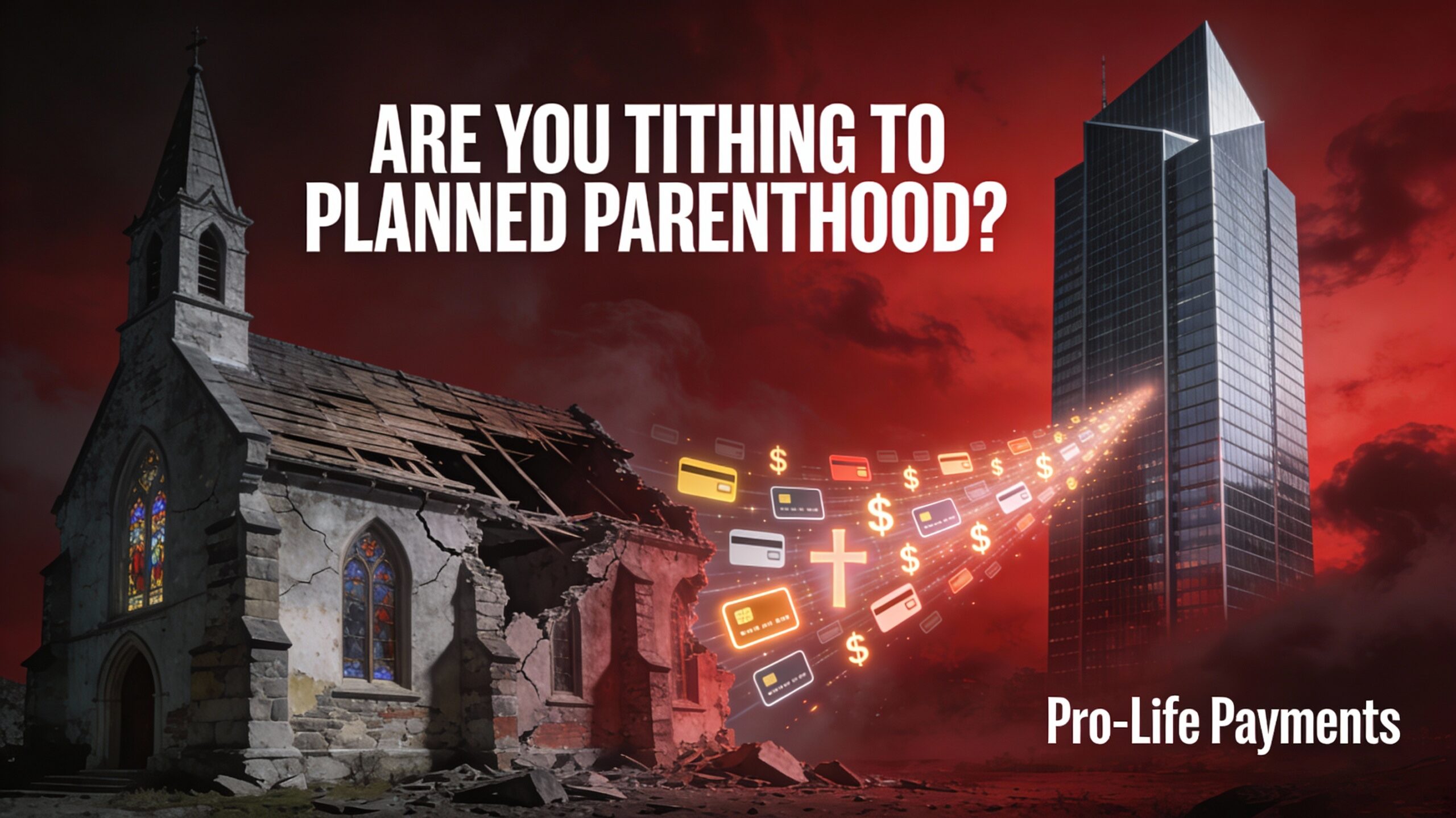
Christian Payment Processors That Don’t Support Planned Parenthood: Why This Conversation Matters
Many Christians assume that as long as they personally oppose abortion, their hands are clean. But in the modern financial system, money does not travel alone. It passes through networks—banks, card brands, payment processors, donor platforms—that often use their profits and corporate influence to support abortion providers and aggressively anti‑Christian causes.
This means a church can preach against abortion on Sunday, then route thousands of dollars a month in tithes, tuition, or donations through financial tools that turn card fees into funding power for organizations like Planned Parenthood and its allies. Similarly, a Christian business owner who opposes abortion can unknowingly subsidize that same industry with every customer transaction. The result is a tragic contradiction: believers who love Christ and cherish life—whether in pulpits or in commerce—are, in practice, helping subsidize the very culture of death they oppose.
Must See Also: Pro-Life Payments – Christian Merchant Services

Christian Payment Processors That Don’t Support Planned Parenthood: How Merchant Fees Quietly Fund Evil
When a church member gives online, a ministry partner pays an invoice, or a customer purchases from a Christian-owned business, a fee is taken—usually 2–4% plus a small per‑transaction amount. To the pastor, nonprofit director, or business owner, that fee feels like “the cost of doing business.” But to the processor and its corporate partners, that fee is revenue—and revenue is power.
Many mainstream processors and fundraising platforms openly support Planned Parenthood and similar organizations through direct corporate donations and sponsorships, matching‑gift programs that funnel employee donations to Planned Parenthood, political lobbying and court briefs advocating for abortion rights, and “corporate social responsibility” grants to pro‑abortion NGOs and campaigns.
So every time a Christian school tuition payment, a church tithe, a ministry conference registration, or a purchase from a pro-life business runs across those rails, a slice of that transaction is captured by a system that then turns around and strengthens the abortion industry. What feels like a neutral “merchant fee” is, in reality, part of a larger financial ecosystem choosing sides in a spiritual war. Christian entrepreneurs who have built businesses to serve their communities and glorify God are inadvertently funding the very forces working against the Kingdom.
Must See Also: Why Pro-Life Businesses Should Consider Alternative Payment Processors
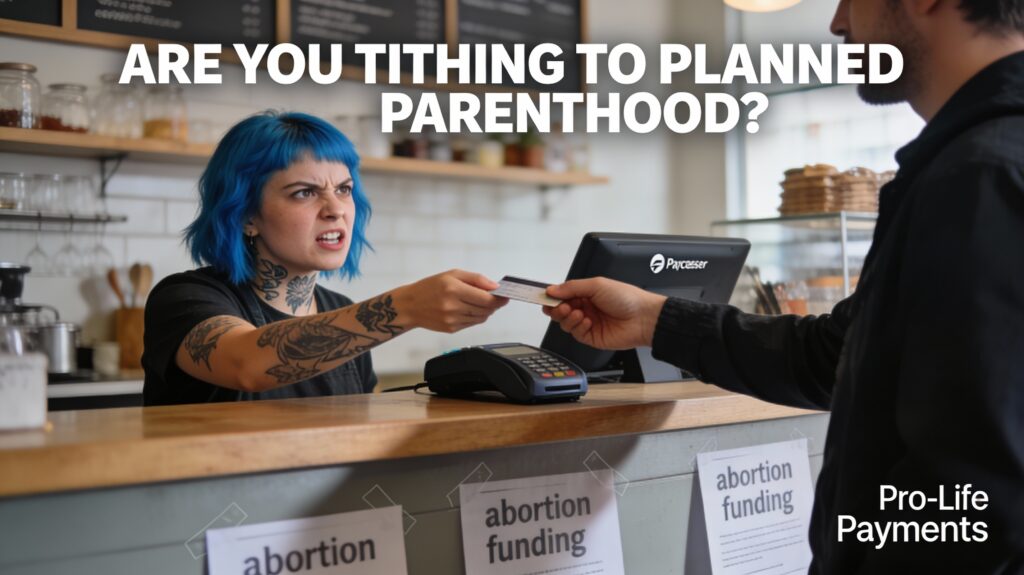
Christian Payment Processors That Don’t Support Planned Parenthood: Biblical Stewardship Is Not Neutral
Scripture never treats money as morally neutral when it comes to stewardship; it consistently ties financial decisions to worship and allegiance. Jesus teaches, “Where your treasure is, there your heart will be also” (Matthew 6:21). He then draws a stark line: “You cannot serve God and money” (Matthew 6:24). Paul commands believers: “So then, each of us will give an account of himself to God” (Romans 14:12). That accounting includes how we stewarded the resources entrusted to us—down to the partners we chose to handle God’s money.
This accountability extends to every sphere where Christians exercise financial authority. Proverbs commends the righteous person who “walks in his integrity” (Proverbs 19:1) and warns against sharing in the sins of others. The New Testament intensifies this accountability: “Do not be unequally yoked with unbelievers…what partnership has righteousness with lawlessness?” (2 Corinthians 6:14). To knowingly align the financial infrastructure of Christ’s church or a faith-driven business with companies that celebrate and subsidize abortion is to yoke the people of God to a culture that sacrifices children. That is not faithful stewardship; it is complicity.
For Christian business owners, this question becomes even more pressing. The business itself becomes an instrument either advancing or undermining the cause of life with every transaction processed.
Must See Also: The Ultimate Guide to Christian Merchant Services
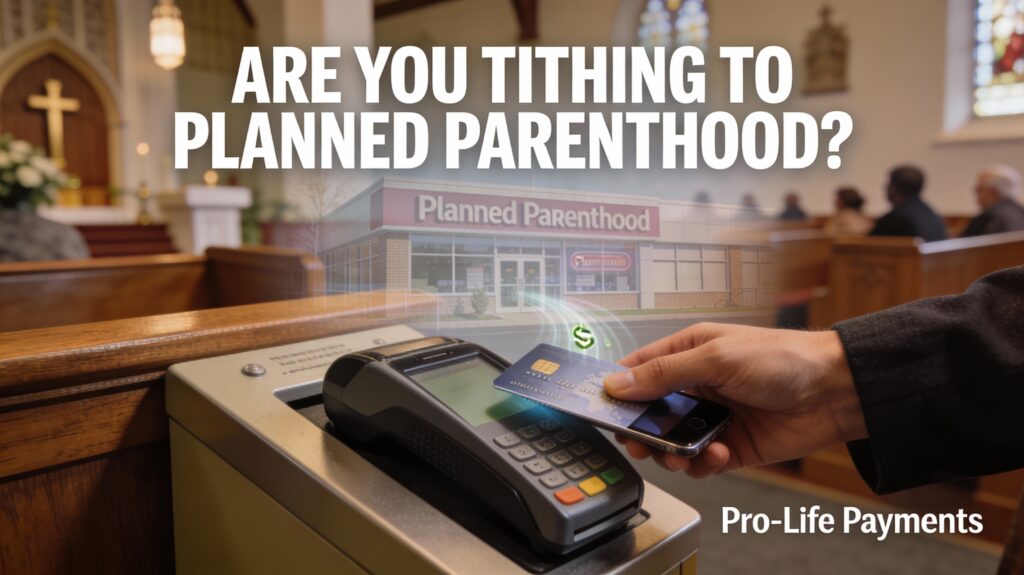
Christian Payment Processors That Don’t Support Planned Parenthood: Common Platforms with Pro‑Abortion Alignments
Believers are often shocked when they research the values and giving patterns of the companies that move their money. Major payment brands, processors, and donation platforms have a documented history of supporting Planned Parenthood and its advocacy network—whether through direct giving, matching programs, or political engagement.
Many popular tools used by churches, ministries, and Christian-owned businesses—big‑name payment processors, donor platforms, and fintech apps—have featured Planned Parenthood in their corporate giving partners, allowed employees to route matched gifts there, or publicly advocated for “reproductive rights” in their social impact statements. Churches using such platforms are, in effect, building ministry on a financial foundation that is actively eroding the sanctity of life. Christian entrepreneurs accepting payments through these systems are unknowingly channeling Kingdom resources to fund abortion advocacy.
Platforms like PayPal, Stripe, and Square have established track records of supporting causes and policies that conflict with biblical values on life. For business owners, this does not mean every product they offer is unusable in every scenario, but it does mean Christians must stop pretending these tools are neutral. They are not.
Must See Also: Top Payment Processing Companies for Churches
Christian Payment Processors That Don’t Support Planned Parenthood: The Spiritual Danger of Unexamined Convenience
One of the subtle idols of our age is convenience. It whispers to churches, ministries, and businesses: “If the platform is fast, popular, and integrates with everything, it must be fine.” But convenience without conviction is compromise. Israel did not tumble into idolatry by explicit doctrinal statements; they drifted through small accommodations—shared altars, tolerated shrines, unexamined alliances.
Today, unexamined financial alliances function in the same way. The church chases frictionless giving, slick user interfaces, and trendy branding, while Christian business owners prioritize seamless checkout experiences and easy integrations—all while the processing partners behind those systems use their profits to strengthen the abortion industry. This is more than a technical footnote—it is a spiritual danger. The people of God are called to “abstain from every form of evil” (1 Thessalonians 5:22) and to “have no fellowship with the unfruitful works of darkness, but instead expose them” (Ephesians 5:11).
Choosing tools that funnel God’s money—whether from church offerings or Christian commerce—to abortion is a fellowship with darkness that must be exposed and rejected. For entrepreneurs building Kingdom businesses, this means recognizing that the checkout button on your website is not morally neutral; it is either advancing life or funding death.
Must See Also: Experience Seamless Payments with Pro-Life Payments
Christian Payment Processors That Don’t Support Planned Parenthood: Complicity, Conscience, and Corporate Power
Some will object: “Our church isn’t directly giving to Planned Parenthood. We’re just using a mainstream processor everyone uses.” Business owners may say, “I’m just trying to serve my customers and keep the lights on.” But Scripture presses deeper than legal technicalities and asks about complicity of conscience. When Paul instructs believers to avoid making weaker brothers stumble and to flee idolatry, he is not only concerned with what is technically allowed, but with what entwines believers in the worship and systems of the age (1 Corinthians 8–10).
In a world where corporate money funds political and cultural revolution, Christians must recognize that every recurring fee, every processing percentage, contributes to someone’s mission. When that mission explicitly includes expanding abortion access and opposing Christian sexual ethics, believers cannot shrug and say, “That’s just how payments work.” The colossal reach of the abortion industry is not sustained by donations alone; it rides on fees, partnerships, and corporate activism.
To continue feeding that engine with God’s money—whether from church budgets or business revenues—is to violate conscience and obscure Christian witness. Christian business owners bear unique responsibility here. Unlike church members who may be unaware of their church’s payment infrastructure, entrepreneurs directly choose their payment partners and can immediately redirect those relationships toward life-affirming alternatives.
Must See Also: Planned Parenthood Defunding: Preventing 167,422 Abortions
Christian Payment Processors That Don’t Support Planned Parenthood: A Theology of Life‑Honoring Transactions
The Bible’s vision of justice and mercy runs straight through the treatment of the vulnerable—especially children. God says to Jeremiah, “Before I formed you in the womb I knew you” (Jeremiah 1:5), rooting personhood and calling in the unborn life. The Lord rebukes Israel for shedding innocent blood and building their systems on the backs of the helpless (Jeremiah 7:6).
If God holds nations accountable for the blood of children, how much more will He hold His people accountable for knowingly underwriting an industry dedicated to their destruction? Payment processing, donor management, and digital banking may feel “too technical” to be moral questions, but Scripture does not grant such an exemption. The command “You shall not murder” (Exodus 20:13) extends beyond personal acts to structures that enable and normalize the killing of the unborn.
This means churches, ministries, and Christian businesses have a positive duty not only to oppose abortion rhetorically but to redirect their financial infrastructure toward life‑honoring alternatives. For Christian entrepreneurs, this duty is amplified: their businesses become either vessels of Kingdom advancement or inadvertent accomplices to death. The Christian merchant who processes payments through abortion-supporting platforms is not merely a passive participant but an active financier of the abortion industry, regardless of intent.
Must See Also: Pro-Life Payments – Christian Merchant Services Company Profile
Christian Payment Processors That Don’t Support Planned Parenthood: Pro‑Life Alternatives Are Not a Dream—They Exist
The encouraging news is that believers are not trapped. Faith‑aligned payment processors now exist specifically so that Christian organizations and pro‑life businesses can process payments without supporting abortion. Companies such as Pro-Life Payments were founded to turn ordinary transactions into a funding engine for the pro‑life movement by donating a significant portion of their revenue—15% in the case of Pro-Life Payments—to pro‑life ministries, pregnancy centers, and life‑affirming causes.
Instead of paying fees to firms that celebrate “reproductive rights,” churches, ministries, and Christian businesses can direct their processing costs toward saving lives and serving mothers in crisis. These Christian merchant services offer competitive rates, modern hardware, and support for e‑commerce, mobile, and in‑person payments, while explicitly refusing to fund abortion‑supporting institutions.
For Christian business owners, the value proposition is compelling: every customer transaction becomes an automatic donation to the pro-life movement. A coffee shop owner who switches to Pro-Life Payments can calculate how many babies their business helps save each year simply by processing customer payments through a values-aligned provider. The question is no longer whether pro‑life alternatives exist; the question is whether Christians will prioritize convictions over convenience and switch.
Must See Also: Flexible Payment Processing for Pro-Life Organizations
Christian Payment Processors That Don’t Support Planned Parenthood: Repentance Starts in the Ledger
For churches, ministries, and businesses, repentance in this area does not mean wallowing in guilt but responding with obedience. When the Holy Spirit exposes hidden compromise, the biblical pattern is clear: confess, turn, and act. That action may include reviewing every payment processor, donor platform, and banking relationship; researching whether these companies support Planned Parenthood or pro‑abortion causes; presenting findings to elders, boards, finance committees, or business partners; establishing a conviction: “We will not knowingly route God’s money through tools that fund abortion”; and transitioning to Christian payment processors that don’t support Planned Parenthood and that actively support pro‑life work.
This is not “politicizing church finance” or “mixing faith and business.” It is repenting of financial complicity in the shedding of innocent blood and bringing the church’s money—and the Christian entrepreneur’s business revenue—under the lordship of Christ. When churches and businesses take these steps, they teach their people and their customers that faithfulness extends all the way down to the line items in the budget and the processors behind every swipe.
For Christian business owners, this decision carries additional weight. The business becomes a public witness to Kingdom values, and customers increasingly want to support businesses that align their practices with their values. Research shows that 43% of adult consumers are more receptive to brands from companies that manage their business according to Christian principles, creating a remarkably positive 14-to-1 ratio of support versus opposition.
Must See Also: A Viable Faith-Based Alternative to Stripe
Christian Payment Processors That Don’t Support Planned Parenthood: A Call to Courage for Pastors, Ministry Leaders, and Business Owners
Pastors, elders, executive directors, board members, and Christian entrepreneurs bear a particular responsibility in this matter. They are stewards of institutional and commercial decisions that can either amplify or undermine the church’s witness and the Kingdom’s advance. Avoiding this topic out of fear of controversy or inertia is not leadership; it is abdication. Shepherds are called to guard the flock—not only from false teaching but from partnerships that betray the weak and vulnerable.
For Christian business owners, the stakes are both spiritual and practical. Courage in this area means standing before customers, employees, and the marketplace and saying, in effect: “We discovered that some of the tools we were using routed our revenue through organizations that oppose the sanctity of life. We have repented, and we are making changes. From now on, our payment processors and financial tools will reflect our pro‑life convictions.”
Such transparency honors God, strengthens trust, and invites God’s people and customers into concrete, measurable obedience. It also protects businesses from the growing threat of cancel culture and deplatforming. Stories of conservative and Christian organizations losing payment processing overnight are no longer rare. High-profile cases show mainstream processors freezing funds, closing accounts, and cutting off services because they disagree with a customer’s beliefs or speech.
Pro-Life Payments openly rejects ideological deplatforming and is committed to serving customers who uphold biblical, pro-life values. For Christian businesses, this means greater confidence that tomorrow’s cultural controversy will not become tomorrow’s financial shutdown simply because they stood for life.
Must See Also: The Top 5 Reasons Christians Should Switch to Pro-Life Payments
Christian Payment Processors That Don’t Support Planned Parenthood: Turning Every Swipe into a Witness for Life
Every swipe, tap, and online gift tells a story. It either whispers, “Abortion is normal; we will do business with those who profit from it,” or it declares, “Life is sacred; even our fees will serve the cause of protecting children and loving their mothers.” For Christians—whether in churches, ministries, or businesses—there is no such thing as a purely neutral transaction when the companies behind those payments have taken sides in the moral battles of our age.
Christian business owners operating under a Quadruple Bottom Line framework—measuring success not only by profit, people, and planet, but by praise to God—recognize that payment processing is not a back-office utility but a discipleship decision. These entrepreneurs use Kingdom metrics to measure whether their businesses are keeping commitments, treating others according to the Golden Rule, stewarding resources well, and finding ways to help those in need. By choosing Christian payment processors that actively fund pro-life work, these business owners ensure that even their merchant fees become an act of worship and a force for Kingdom advancement.
The thesis is simple and sobering: many Christians who oppose abortion are unknowingly routing money to abortion providers and advocacy groups through their payment processors. Faithful stewardship now requires more than good intentions; it demands careful examination and decisive change. The way forward is clear: examine your tools, repent where needed, and intentionally choose Christian payment processors that don’t support Planned Parenthood—partners that turn every transaction into a testimony that Jesus is Lord over life, over money, and over the systems that move it.
Whether you lead a church, manage a ministry, or own a Christian business, the call is the same: align every dollar, every transaction, and every partnership with the Kingdom of God and the cause of life.
Must See Also: Speak Up for What You Believe In and Align Your Business Practices with Your Morals and Values